

Mastercard’s Virtual C-Suite and the Rise of AI-Powered Small Business Leadership 2026
You cannot afford a CFO. You probably cannot afford a CMO either.
Mastercard just decided that should not matter anymore, and the implications for every founder, solopreneur, and lean operator are bigger than the product announcement itself.
On 10 March 2026, Mastercard announced something that deserves more attention than it received in the fintech headlines. The company launched Virtual C-Suite, a collection of agentic AI agents designed to function as digital executives for small and medium-sized businesses. The first module, Virtual CFO, draws on insights from 175 billion annual Mastercard transactions and integrates with a business’ existing accounting systems and banking applications. You ask it questions like “What is driving this week’s cash flow swing?”, and it surfaces scenario-modelled recommendations in simple layman terms. According to Fortune’s reporting on the launch, the global virtual CFO market is currently valued at $4.7 billion and is projected to exceed $10 billion by 2035.
That is not a fintech story. That is an entrepreneurship story. And if you are running a lean business, a solopreneur operation, or a startup with a team of five to ten people who are trying to make every hour count, it is a story that directly concerns you.
What Mastercard Actually Announced and Why It Matters

Mastercard’s Virtual C-Suite is not a dashboard or a reporting tool. It is an agentic system, meaning it is designed to take action, draw inferences, and surface recommendations autonomously rather than wait for you to query it manually. The Virtual CFO module, which is the first to launch, combines Mastercard’s proprietary transaction data with your business’ own financial records and connects to existing banking infrastructure. Mastercard describes it as providing scenario-modelled financial intelligence, helping small business owners make decisions that previously required either a senior finance hire or an expensive advisory engagement.
The announcement was covered by Fortune, PYMNTS, Finovate, and Financial IT, all framing it as a fintech product launch. Most coverage focused on the feature set and the addressable market size. What very few outlets examined is the structural shift underneath the product. For decades, access to C-suite level strategic intelligence has been a function of company size. Large enterprises hire CFOs, CMOs, and CISOs. Growth-stage companies hire fractional executives. Small businesses improvise, rely on gut instinct, or spend money they cannot afford on advisory hours. Mastercard’s Virtual C-Suite, if it delivers on its promise, changes that access curve permanently.
From Blockchain Basics to AI Agents: The Four-Year Whiplash
In 2022, I completed the FinTech: Innovation and Transformation in Financial Services programme at the National University of Singapore. The curriculum was thorough, rigorous, and genuinely forward-looking for its time. We covered conversational AI and chatbots as they were being deployed in banks, including OCBC’s Emma, Bank of America’s Erica, and POSB’s digital customer service tools. We studied P2P lending platforms across the US, UK, China, and Southeast Asia. We examined the rise of GrabPay, AliPay, WeChat Pay, and the payment infrastructure race reshaping ASEAN. We worked through RegTech frameworks, MAS regulatory sandboxes, the Payment Services Act, and how Singapore was positioning itself as the most sophisticated FinTech regulatory environment in the region.
And then there was blockchain. Blockchain was everywhere. It was the answer to data privacy, as well as the architecture for the AI marketplace of the future. The vision was compelling: a decentralised world where blockchain stored the data layer, AI processed it, and IoT monitored everything in real time. It was a beautifully constructed theoretical future. Singularity, AICoin, Chnyge, Crypto Angel: Smart contracts as the backbone of financial services. Permissioned ledgers as consent management platforms. It was framed as, “How do we use blockchain to advance AI responsibly?”
What nobody in that room said, not once, was: “In four years, a major payments network will give every small business a virtual CFO powered by 175 billion transactions, and it will not involve a blockchain at all.” – the whiplash that was unexpected.
Four years, and that is all it took to move from “blockchain is the foundational infrastructure for AI in finance” to “Mastercard just gave you an agentic executive.” If your head is spinning, that is the correct response. The pace of change between 2022 and 2026 has not been linear. It has been exponential in the most literal and disorientating sense (I’d say irritating in a disorienting way as curriculum programme for executives had to be kept updated for every six months, as mentioned by one of my instructors). We are not upgrading tools. We are rebuilding the underlying logic of how businesses operate, who has access to strategic intelligence, and what the role of a human executive actually is.
I call it “AI Information Overload” for a reason. It is an entire comprehension problem.
The information is arriving faster than the human nervous system can contextualise, prioritise, and act on it.
– ladyintechverse
And if you are trying to stay current with every development while also running a business, creating content, managing clients, and maintaining some semblance of a life, burnout is not a risk. It is a scheduled outcome with an impending doom to reset your entire being. The AI Productivity Paradox I wrote about in 2025 has not resolved. If anything, it has intensified further, and it is not helping with the existential crisis when the war begets another war.
Your Digital Twin Is Already Being Written: The “Black Mirror Warning” that Netizens have been Discussing from Reddit to Social Media and across Independent Publishers.
I want to make an analogy here that sounds absurd until you sit with it for a moment.
Black Mirror’s Season 7 episode “USS Callister: Into Infinity” (now streaming on Netflix) returns to one of the series’ most iconic premises: a digital clone, built from someone’s DNA and data, living an entire existence inside a simulated universe. According to Netflix’s own editorial coverage of the episode, the story explores what happens when a digital version of a person diverges from their real-world counterpart, develops leadership capabilities through adversity, and ultimately merges back into the real-world self, described by creator Charlie Brooker as the two versions becoming “whole again.” The digital Nanette had, in Brooker’s words, “been through a lot and stepped up and become this very capable leader, whereas the real-world Nanette is running behind on that.”

Now, let’s strip the sci-fi layer away.
What Mastercard is doing with Virtual C-Suite is a first-generation, commercially packaged version of that premise. It is building an agent that mirrors your financial behaviour, learns your business patterns, and makes decisions that a more capable version of you with access to 175 billion data points would make. That is not a CFO. That is a version of your business intelligence that is externalised, scaled, and handed back to you as a bespoke service.
This is precisely the trajectory that agentic AI was always heading toward. The 2025 ripples were the early signals. What we are seeing now are the products that make those ripples tangible. Think of it like the PC game, “The Sims“, whereby the characters are not fictional. They are trained on your paying behaviour patterns, daily routines you enforce on them and so forth. It is similar to training on your data, your preferences, your voice, and your decision-making patterns. The difference between a game simulation and an autonomous AI agent operating on your behalf is an exponential growth towards degrees of concerns that matter.
What a Real Digital Twin would actually Do for You
Let me tell you what I genuinely want from a digital twin because I think it is worth naming it at this point of time, until it probably isn’t as the world is spinning to collapse.
What I’d expect: I want it to read my emails and summarise what actually needs my attention. I want it to draft responses for my reviews, flag the spam, delete the irrelevant, and escalate the urgent before I even open my inbox. I want it to manage my calendar proactively, not just schedule meetings I tell it about, but anticipate conflicts, set agenda priorities before calls, and follow up on outstanding items without me having to remember to ask. I want it to attend the virtual calls I cannot make, represent me sensibly, and brief me on what happened. I want it to research topics I need to understand, surface the most reliable sources, and distill them into something I can actually use in a thirty-minute window on a Tuesday afternoon.
The AI memory portability shift covered here earlier this month is a step in that direction. The fact that you can now export your personalised AI context across platforms means the accumulated profile of how you work and think is no longer locked to a single tool. That is the foundational infrastructure for a digital twin: portable, persistent, progressively learning. But the infrastructure and the vision are still at least two or three significant product cycles apart.
Something worth watching closely in this space is Perplexity’s Personal Computer, launched on 11 March 2026 at the company’s inaugural Ask developer conference in San Francisco. It runs continuously on a dedicated Mac mini, merging your local files and applications with Perplexity’s cloud-based AI infrastructure, operating on your behalf around the clock. Perplexity describes it as a “digital proxy” that works constantly on your behalf, allowing you to orchestrate all of your tools, tasks, and files from any device, anywhere. Sensitive actions require explicit user approval, and a kill switch gives immediate control back to the user. That is a meaningfully different design philosophy to some competitors, and it is closer to what a responsible digital twin architecture should look like than anything else that’s currently available. It is not yet a digital twin. It is a digital assistant with persistent memory and local access. But the direction is unmistakable, and it is worth paying attention to.
The research from HBR covered here in February made a point that has stayed with me: AI intensifies work before it reduces it. We will likely burn out building the systems that are supposed to prevent us from burning out. That is not a cynical observation. It is a pretty honest one. And it is the right time to say this aloud before we collectively sprint toward digital twin territory without the governance infrastructure to support it.
Before the Digital Twin Arrives, the Governance has to Come First
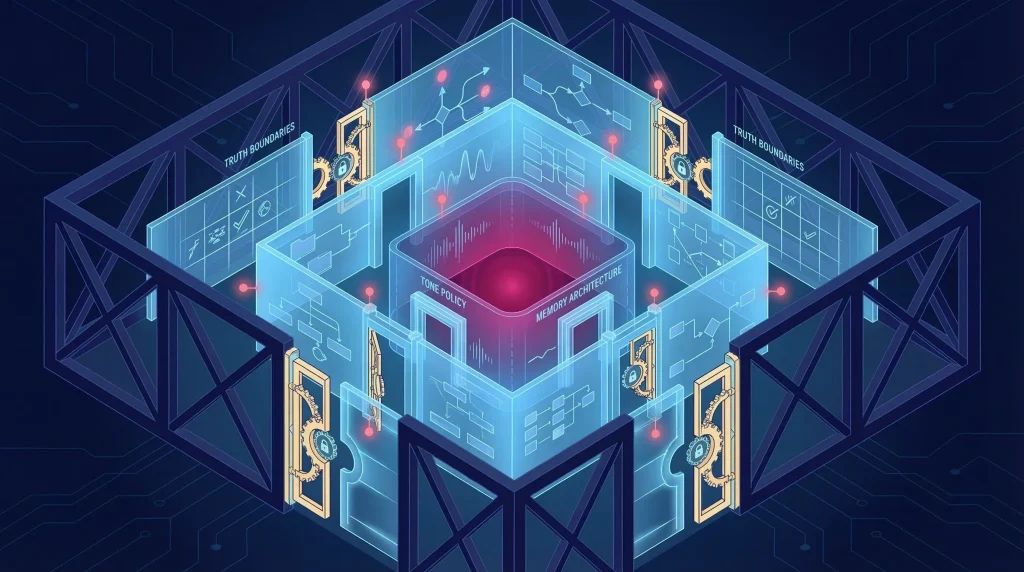
Here is where I need to be candid with you because enthusiasm for where this is heading has a way of skipping over the part that makes it safe.
Every agentic AI system, whether it is Mastercard’s Virtual CFO or your hypothetical future digital twin, carries the same structural risk: scope creep, misaligned decisions, and the absence of a guardrail that stops the agent from doing something plausible but wrong. An agent trained on your patterns will make decisions that look like you. But patterns are not judgement. A virtual CFO that cuts a cost line because the data suggests it should, without understanding the relationship context or the strategic exception is not helping you. It is automating a mistake that could amplify and burn future profits through churn rate.
This is why the trust and governance framework for public-facing agentic AI is not an optional infrastructure. It is the precondition for everything else working. An agent without clearly defined truth boundaries, escalation paths, and tone policies does not become more useful as it becomes more capable. It becomes more capable at going wrong. The 90% AI pilot failure rate is not an anomaly. It is what happens when organisations deploy capability without much in depth application across governance, to scale without proper structure, and automation without accountability.
What this also means is that the growth of AI Architect roles is not a trend. It is a structural shift in the labour market. Someone has to design the guardrails, the escalation logic, the memory architecture, and the behavioural rules that make an agentic system safe to deploy publicly. That job description did not meaningfully exist in 2022. By 2028, it will be one of the most strategically valuable hires any organisation can make. The prompt engineer era is already ending. What replaces it is a more rigorous discipline of skills creation in JSON, Markdown, and structured instruction files that form the actual architecture of how AI agents behave.
The creative layer is collapsing into the technical layer, and the people who understand and have experiences in both domains will define the next decade of digital operations.
– ladyintechverse
The Macro Warning that Caught Us Unaware
I am going to say the uncomfortable thing now because this is Real Talk on AI and that is the point.
The access democratisation that Mastercard’s Virtual C-Suite represents is genuinely positive. Giving a small business owner the financial intelligence of a senior CFO for a fraction of the cost is a meaningful shift in power dynamics. But it sits inside a macro environment that is moving in the opposite direction. Senior white-collar jobs, including the CFO, CMO, and CISO roles that these AI agents are designed to replicate, are not being replaced and redistributed. They are being replaced and consolidated. The intelligence is being commoditised, while the human role is being contracted. Thus, the vacancy roles we have seen as hiring humans in fractional positions no longer fits into the C-Suite alone. It is now quite common and has been brought down to managerial positions as well.
Meanwhile, inflation is rising in most major economies. Governments are printing more money to sustain growth narratives that the underlying economics no longer fully support. The combination of AI-driven job displacement in knowledge-intensive professions, rising costs of living, and a shrinking market for senior specialist expertise is not a comfortable trajectory. The B2B Reset of 2025 identified the shift towards lean and strategic operations. What it could not fully predict is how fast the executive layer of the economy would begin to compress.
I am not forecasting doom here. I am observing a pattern that deserves the honest attention. Strategic thinkers who can operate both the human and AI layers of a business, who understand governance as well as capability, and who can build the systems that make agents trustworthy rather than just impressive will not be replaced. They will be the ones designing the replacements. Whether that constitutes a sustainable economy is a question that policy, technology, and leadership will have to answer altogether.
And as for my digital twin? I genuinely look forward to the day it exists. I have a running mental list of every email I do not want to write, every calendar conflict I do not want to manage, and every follow up or catch up calls I would happily hand over to a very capable, well-governed, deeply personalised AI version of myself. The question is just whether she will arrive before I have finished burning out building the infrastructure that makes her possible. (LOL. 🥲)
At LadyinTechverse, this is the kind of shift I track without the hype layer, without the press releases dressed up as analysis, and without pretending that every development is either utopian or catastrophic. Mastercard’s Virtual C-Suite is a genuinely significant product announcement. The digital twin trajectory is a genuinely significant societal shift. Both deserve the attention it needs, and not just coverage.
If you want this kind of thinking delivered directly, subscribe to the LadyinTechverse mailing list, or find the social snippets on Instagram at @fsmarcomtech, or my AI twin voice/s on the LadyinTechverse Spotify Podcast and ElevenReader Audiobook Series.
Frequently Asked Questions (FAQ)
Internal Articles
- Agentic AI in 2025: Ripples that Signal the 2026 Workflow Tsunami
- How Brands Build Human Trust in the Age of Agentic AI, Starting in 2026
- Your AI Memory Can Now Travel With You
- AI Intensifies Work and Multiplies Risk According to HBR’s 2026 Governance Research
- Digital Trust in 2025: Governance and Security Shaping the Next Economy
- Why More Than 90% of AI PIlots Fail and How Hyper Personalisation Wins
- The AI Productivity Paradox 2025
- The B2B Reset: Why 2025 Belongs to Strategic Thinkers, Lean Tech, and Transparent AI
- Data Quality is the Power Move behind every winning AI Strategy in 2025
Sources Referenced
- Mastercard official press release — “Mastercard advances its agentic AI strategy with Virtual C-Suite, bringing executive level intelligence to small businesses” (10 March 2026)
- Fortune — “Mastercard is rolling out a ‘virtual CFO’ built with AI for small businesses” (10 March 2026)
- Fortune — “How AI is about to transform the C-suite for small businesses” (11 March 2026)
- Financial IT — “Mastercard Advances Its Agentic AI Strategy With Virtual C-Suite” (10 March 2026)
- Finovate — “Mastercard Launches Virtual C-Suite to Offer Small Businesses Executive-Level Insight” (March 2026)
- Perplexity official blog — “Everything is Computer” (11 March 2026)
- Axios — “Perplexity launches Mac-based AI agent” (11 March 2026)
- PYMNTS — “Perplexity’s Computer for Enterprise Completed 3.25 Years of Work in Four Weeks” (13 March 2026)
- Netflix Tudum — “Black Mirror: USS Callister: Into Infinity Twist Ending Explained” (17 April 2025)
Visual Content Disclaimer: All images in this post are AI-generated.
Mastercard’s Virtual C-Suite and the Rise of AI-Powered Small Business Leadership 2026
#MastercardVirtualCSuite #AgenticAI #AIForBusiness #VirtualCFO #DigitalTwin #Solopreneurs #SmallBusiness #AILeadership #DigitalTransformation #LadyinTechverse #DigitalSanctuary #DigitalTransformation #MarketingTransformation #RealTalkOnAI #AIInnovation #FutureOfWork #AIAgents #FounderLife


Leave a Reply