

Why digital communication needs a Makeover in 2025
How AI, Empathy and Strategy Are Redefining Business Conversations
Remote work isn’t just a trend; it’s the new default.
And yet, digital communication hasn’t quite caught up with the super-fast AI evolution as we speak.
Across homes, cafes, and co-working spaces, employees are juggling Slack pings, buried emails, broken Zoom calls, and ghosted project briefs. The result? A digital echo chamber of misalignment, fatigue, and missed context.
This is communication overload, and it’s now one of the biggest productivity threats in remote-first and hybrid workplaces.
But the future of communication (starting today) isn’t about broadcasting more messages. It’s about human-centred clarity, which is powered intelligently by AI.
Smart, intuitive, people-first digital communication systems are no longer optional, as they have become the daily essential tools of today’s hyper-connected workspaces.

💻 Navigating Digital Communications in 2025: A Personal Journey Through the Techverse
Let’s rewind to a moment that changed everything.
I remember the pulse of anxiety sending my first corporate-wide e-newsletter. It had a static image, and then we moved on to a PDF attachment. I wasn’t sure who, if anyone, would open it. Back then, we measured success by campaign ROIs, post-event surveys/responses/footfalls, surveys and feedback, but there was a lack of digital metric tools of measurement.
Fast forward to recent years and today: email open rates, dwell time, click-throughs and smart segmentations are at my fingertips. Today’s digital communication is measured, optimised, increasingly intelligent, and yet strangely, still deeply fragmented.
That contrast shaped how I view this tech evolution’s impact in today’s segmented workflows and global community workspaces.
Over the years, I’ve had the privilege of shaping my career at the crossroads of Corporate Advertising, Communications, Digital Strategy, and B2B Marketing. It’s been a journey of constant learning; one that’s allowed me to witness, adapt to, and help shape the evolving ways of how businesses connect with both their partners and customers across B2B and B2C landscapes.
The journey hasn’t been linear, as it has been layered, experiential, and at times humbling. But every challenge, from early notification emails and SMS alerts to modern AI-enhanced chatbots, taught me one foundational truth:
Technology only works when it truly connects with people.
– Lady in Techverse
How I Adapted to Remote Work and Digital Communication in 2025
Remote work didn’t just happen to me — it reshaped how I think, work, and lead in my projects.
Back when I was managing fast-moving digital projects across regions, the concept of “remote-first” wasn’t the norm. It was the workaround. We relied on standard office productivity tools like Microsoft Office Suite – you name it – Word, Excel, PowerPoint for shared documentation editing, former MSN/Skype chats to keep conversations flowing, and intranet drives to move large editable working files back and forth. It worked, not because the tools were sleek, but because the people behind them were sharp, emotionally intelligent, and committed to making it work and succeed through sheer determination.
One of the hardest lessons? Letting go of the need for “real-time everything“.
There was a time when I believed that faster responses equalled better performance. But I’ve come to learn that asynchronous workflows, when done right, offer more space for depth, more time to think, and better outcomes, especially in cross-timezone, hybrid teams.
We shifted from “Did you receive my message?” to “Here’s what happened and why, etc., respond when you can.” And it changed everything. Projects became slightly smoother. Stress levels dropped. Collaboration became more thoughtful and far less reactive.

Building Emotional Resilience Through Digital Boundaries
In the early remote days, work and communication boundaries were blurry. Work bled into life and vice versa. But with experience, and burnout I learnt to build structure:
- Time-blocking for deep work
- Slack “Do Not Disturb” mode and Discourse community forums’ focused topics
- Voice memos instead of urgent pings
- Scheduled check-ins instead of constant nudging
These weren’t just hacks; they were acts of digital self-respect.
And honestly, they taught me that tech is only as healthy as the habits you build around it.
Why 2025 Is the Year to Rethink How We Talk, Connect and Lead

When Communication Systems Fail the People They’re Built for
In 2025, the promise of digital transformation isn’t just about better tools. It’s about better timing, better inclusion, and better leadership.
Organisations today are more matrixed than ever. Employees report across departments, regions, and functions. They work from home, co-working hubs, airports, hospitals, childcare centres, beaches and more. Life, work, and geography are colliding in ways legacy communication systems simply were not designed to handle.
Let’s be honest — I believe we have over-built for presence and under-designed for absence.
If one team member goes on maternity leave, parental leave, or compassionate leave, how often does their voice disappear from the strategy and operations table? If someone is ill or caregiving across time zones, does the system allow them to participate asynchronously, or are they simply left out?
We’ve reached the edge of what real-time communications can offer. Now, it’s time to redesign around real-life rhythms.
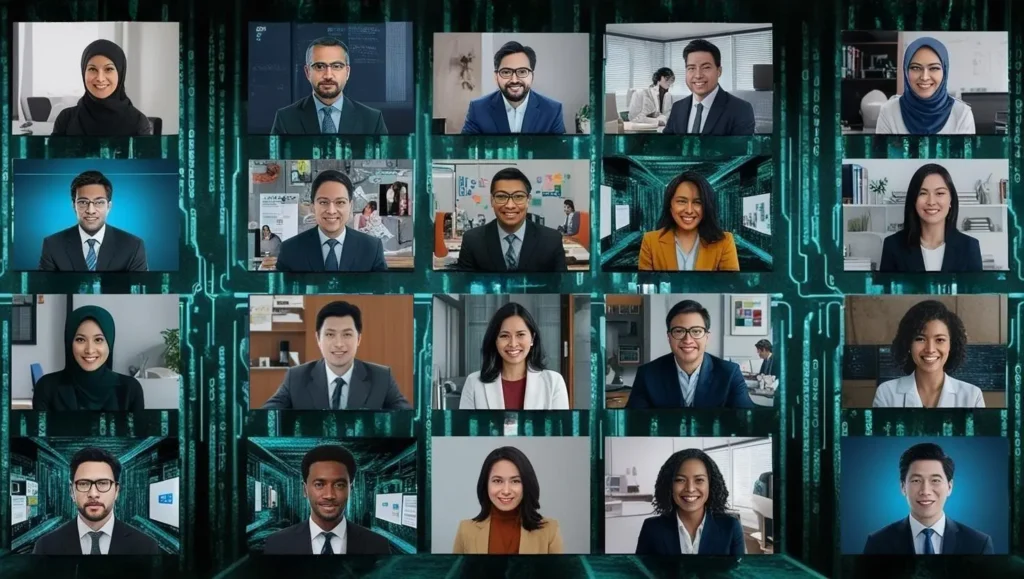
Matrixed Environments are More Common and More Chaotic
Matrixed organisations are designed for agility. But they often breed ambiguity.
According to IMD, one of the top five pain points in matrixed structures is unclear communication, especially when employees report to multiple managers with competing expectations and work dynamics. In these environments, messages get lost, priorities clash, and alignment becomes a moving target.
Without clear protocols and modern tools, confusion sets in. What’s urgent? What’s noise? Who’s in charge of what? These questions aren’t just operational. They’re cultural.
Matrixed Teams, Real-Life Disruptions, and the New Communication Reality
2025 is showing us one clear truth: Communication systems built for speed and control are crumbling under the weight of complex human realities — from global time zones to parental leave, sick days, and to bereavement.
In matrixed organisations where employees report to multiple leads across countries, departments, and digital silos — clarity is often compromised by over-communication, tool fatigue, or simply poor timing.

The Techverse Shift: From Synchronous Pressure to Asynchronous (Async) Freedom
The real innovation in 2025 isn’t about louder notifications, flashier dashboards or data visual analytics that are aesthetically-pleasing. It’s the rise of emotionally intelligent, AI-supported asynchronous communication.
Platforms like Slack AI, Microsoft Teams with Copilot, Notion AI and DeepL Translate are enabling global teams to:
- Summarise threads and long conversational updates
- Prioritise based on role and urgency
- Translate into native languages instantly
- Maintain context across multiple time zones and locations
This isn’t about working 24/7. It’s about ensuring that when someone returns from his/her leave, whether it’s five hours or two months, they’re not playing catch-up with digital chaos.
It’s not about replacing people. It’s about respecting their reality issues, while ensuring that the project mission is moving forward constantly.
– Lady in Techverse
My Story: Rethinking Workflow When a Team Member was Hospitalised
I vaguely remembered about a critical campaign launch phase when one of our key collaborators was suddenly hospitalised for almost two weeks.
There was no time to reassign everything, and it doesn’t help that the client’s deadline wasn’t moving either. So, we had to act fast and lead with clarity.
We relied heavily on shared documentation using Excel sheets, constant messaging across former MSN/Skype, and file transfers through our company’s intranet drives to ensure that our working files are constantly shared for editing among ourselves – from Adobe Creative Suite of files to Microsoft Office files. It wasn’t fancy but it worked. And honestly, it worked because the team had high emotional intelligence (EQ) and high competency levels. Everyone instinctively stepped in, and the project moved forward smoothly, like it had its own legs to walk on.
We even brought in a temporary freelancer to help generate design sub-templates so the client’s interface milestones could be met on time. These days, AI can do this – lucky people get to experience this in real-time.
That mind-altering experience reminded me; true resilience in a team isn’t about having perfect conditions, flashy tools or gadgets — it’s about building trust, and systems that flex when life throws at us, the unexpected lemons.
Leadership in 2025: Designing for When We’re Not Available
We’ve glamourised hustling and jostling, constant availability, and real-time response that it’s a sin if we are not responding or working while we are on leave or let alone, on sick leave.
But in 2025, real leadership is measured by how well your team performs when you’re not there.
If your system can’t operate when someone’s offline, on medical leave, or grieving a loss — then it’s not scalable. It’s fragile and poses a very huge problem for the #FutureofWork and #FutureProofWorkplace settings.
Ask yourself:
- Is our knowledge centralised or trapped in direct messages (DMs)?
- Can our workflow processes survive when a key member is being offline for a week?
- Are we actually designing systems that adapt to life’s unexpected situations or only ideal conditions?
This is the hard truth but necessary to redesign – not of tools but of mindsets.
The Path Forward: Human-First Communication is the Real Innovation
Let’s stop mistaking communication volume for value.
The best organisations in 2025 will be those who:
- Design with life in the room (including all forms of leave or absence)
- Embrace async as a default, not an exception
- Equip teams with AI that enhances clarity and knowledge capacity, not just speed in phases and milestones
- Lead with empathy and not urgency
As we have seen, the real goal of communication isn’t just to inform.
It is to include.
It is to empower.
And it is to endure, even when the room changes.
This brings us to the biggest problem in the whole wide world:
Internal Communication or some would say Employee Communication and Engagement

Leading into What Matters Most: Internal Communication & Employee Engagement
If rethinking how we talk, connect and lead is the starting point, then employee communication and engagement is where the transformation gets more real.
Because tools are only as good as the trust they’re built on.
And in 2025, that trust is no longer just top-down. It needs to flow sideways, diagonally, and asynchronously, especially in remote-first, matrixed teams.
We’ll unpack how 2025’s most intentional organisations aren’t just deploying AI for efficiency. They’re using it alongside empathy and emotional intelligence to build cultures where people actually feel seen, heard, and valued.
Whether someone’s dialling in from a noisy café, catching up between business meetings, or after a newborn goes to sleep. The best systems are designed to include them, not bypass them.
So the real question becomes:
How are the most future-ready teams making this work — not just in theory, but in real, messy, everyday life?
AI-Powered Personalisation and Proactive Insight
Let’s start here: your internal updates shouldn’t feel like company-wide spam. AI is finally helping businesses communicate with intention, without the frequency.
From auto-personalised team updates to real-time pulse checks, AI is enabling:
- Smart routing of relevant info to the right people
- Predictive alerts when morale is dipping
- Chatbots that help answer HR or Operations questions in seconds (progressive)
Artificial Intelligence is revolutionising internal communications by enabling hyper-personalised messaging, real-time insights, and automated updates. AI-powered chatbots are transforming employee support, reducing response times from hours to seconds. Predictive analytics can identify and address issues before they escalate, allowing organisations to take proactive steps to enhance engagement and satisfaction.
It’s less about automation for the sake of speed, and more importantly, about helping people feel seen without making them scroll through irrelevant noise or nonsensical feedback.
The Quiet Power of Human-First Leadership
Employees in 2025 are calling for more than transparent policies. They’re asking for transparent people at the top.
Gone are the days of corporate memos signed off with stiff and business jargon without the 360 degree feedback loop. Today’s best leaders speak like humans. They share setbacks. They check in intentionally, aside from stories, because real stories connect far better than stats ever will (depends on the scenario, context and the purpose).
Here at Lady in Techverse, I always say this:
You can’t outsource empathy but you can
– Lady in Techverse
design around it.
That’s what great modern leadership looks like. Real, relatable, and radically honest.
Measuring what really Matters – Impact and Driving Engagement
Engagement shouldn’t just be a quarterly survey buried in a Google Form or Pigeonhole. It should be an ongoing signal indicator.
With the right tools, organisations now track:
- How many people actually open or engage with internal content?
- How quickly issues are raised and resolved?
- How connected teams feel across geo-location or department?
Measuring the effectiveness of internal communication is indispensable. Key performance indicators such as employee engagement, talent retention, and interaction rates are being closely monitored. Specialised tools are essential to centralise, analyse, and efficiently leverage all these data, ensuring that communication strategies are aligned with organisational goals and employee needs.
Data does help to support a well-informed-decision-making approach, but only if it leads to above 85% reliability / conversion rate. Because a 93% engagement rate means nothing if it doesn’t lead to meaningful connections.
How to strengthen Employee Engagement through authentic Communication in 2025
Here’s the real Comms talk: it’s no longer enough to “have a comms plan.” I have honestly seen this everywhere:
“C’mon guys! Are you really sure you know what you’re doing and looking to hire talents to expand and execute your Comms plan?”
You need a strategy that works when:
- Your head of business unit is on parental-care, child-care, overseas leave, etc.
- Your marketing exec is recovering from burnout
- Your team is spread across more than six countries and three time zones
That’s why Internal Communication / Executive and Employee Communication + Employee Engagement need to move beyond updates and dashboards, and into human-first ecosystems where tech enhances, and not replaces human connection.
Embracing Asynchronous (Async) Communication across Time Zones
Async communication has become a cornerstone in managing distributed teams. Tools like Slack AI and Microsoft Teams with Copilot are enhancing async conversations and workflows, allowing teams to summarise threads, prioritise messages, and maintain context across time zones. Also, knowledge-base tools such as Notion and Slite enable detailed documentation and collaboration without the need for real-time interaction, accommodating different time zones and personal schedules. This approach is particularly beneficial in matrixed organisations, where team members may have varying status availability due to leave or other commitments. Imagine your very own Intranet’s Wiki Dept or Team Pages.
In the next section, we’ll break down how today’s organisations are weaving AI, empathy, and async workflows into their culture, and what that actually looks like when people are tired, remote, or just going through life.
Let’s get into the heart of it.
Deep Dive: Rethinking Communication in Matrixed Teams
In 2025, digital communication isn’t just evolving. It’s being tested in matrixed organisations, where structure is fluid, reporting lines overlap, and priorities often collide.
This complexity isn’t a flaw. It’s just a feature of how modern work operates. But it demands intentional strategies and smarter systems to keep people aligned.
To fix this, the solution isn’t about having or organising more meetings. It’s smarter, people-first design approach.
The Matrix Mindset Shift
This is what I believe:
If your communication systems can’t support your team when life happens, then you don’t have a strong comms strategy. You have a fragile one instead. (I will share more on this in the upcoming blog topics covering on mindset shifts. Stay tuned.)
The best matrixed organisations in 2025 will:
- Structure workflows to adapt to real-life interruptions
- Engineer flexibility into their operational systems
- Design async by default
- Pair empathy with tech
- Ensure flexibility is foundational in their workflows
It’s not about pinging everyone harder. It’s about making sure everyone can still contribute — even if they’re not in the room.
This isn’t about replacing people. It’s about respecting their realities while keeping the mission moving forward.
Turning Communication into Connection — The Internal Comms Wake-Up Call
How do we turn communication into connection, especially in 2025’s fast-paced, emotionally stretched, remote-first workplaces?
The truth is, we’re in the midst of a major reset. Internal communication is no longer just about updates and all-staff bulletins. It’s about keeping teams connected, emotionally aligned, and motivated, even when they’re oceans apart or balancing the unpredictability of life.
What’s changing?
Let’s explore the tools, behaviours, and leadership shifts redefining internal comms in 2025.
AI can accelerate Comms but it can’t Replace Human Trust
Let’s get one thing straight! AI is revolutionising Internal Comms, no doubt about that.
Even Salesforce is using internal AI career coaches to guide employees through upskilling journeys, with real-time suggestions and progress mapping built into their Comms ecosystem.
But over-relying on AI risks making the Comms campaigns feel cold, automated, or performative. The best organisations in 2025 know that tech doesn’t replace empathy. It should extend it.
Inclusivity, Accessibility, and the Rise of Immersive Comms
We’re also entering a new era of inclusive communication, where it’s not just about who receives the message, but how they receive it.
Virtual Reality (VR) and Augmented Reality (AR) are gaining ground in onboarding and internal training. Companies like Accenture and PwC are using immersive tools to run team-building exercises, simulate scenarios, and onboard new employees in globally distributed teams.
It’s a reminder that Internal Communication in 2025 isn’t static. It’s immersive, multimodal, and emotionally-aware.
– Lady in Techverse

Authenticity over Authority: The Leadership Shift that Matters
Internal Comms isn’t just a Comms team’s responsibility anymore. It’s a leadership test.
Employees are no longer content with well-designed decks and generic video announcements, achievement highlights and interview clips. They want leaders who speak like humans, share context, own mistakes, and invite real dialogue, and not just feedback polls that are left dusted over time.
This means dropping the stiff “management speak” and embracing storytelling, vulnerability, and open comms loops. The most respected leaders today are those who lead with empathy and communicate with intentionality, and not just charisma.
AI Can Empower, but Not Without Ethics and Strategy
We must embed transparency, human oversight, and fairness into every communication channel that AI touches.
The Ethical Tech Mandate for 2025
What does that look like?
- Consent-first data use
- Clear AI disclosures
- Bias-aware algorithms
- Opt-out pathways
Ethical AI = Trustworthy Communication
Real Challenges and Real Fixes: Top 5 Communication Gaps
| Challenge | AI-Driven Fix |
|---|---|
| Misinterpreted messages | AI tone-check + human review loops |
| Time zone delays | AI async summary tools & timezone schedulers |
| Message overload | Smart filters + AI priority inboxes |
| Cultural context loss | Localised content training for AI |
| Privacy fears in monitoring | Transparent AI usage policies |
A Personal Call to Action — The Digital Reboot We All Need
Lady in Techverse is more than a blog. It’s a digital sanctuary.
For the remote leader trying to build culture.
For the startup founder navigating noisy platforms.
For the quiet builder who’s tired of shortcuts.
This isn’t about hype. It’s about heart.
Real frameworks. Ethical tech. Strategic communication for people who care.
You don’t need another Productivity app
Let’s be honest and admit that some of us aren’t short on tools. We’re drowning in them.
From endless task managers to AI summarisers, calendar sync tools, chat integrations, virtual whiteboards, screen recorders, dashboards, and notification systems, overwhelming is overrated as it seems. And somehow, despite all these scaffolding and constructive work across digital architecture systems, the work still feels scattered. The people still feel disconnected.
The world isn’t quite ready to fully unpack, let alone redesign on how we’ve been working for decades. From the industrial revolutions of 3.0 to 5.0, we’ve come a long way in innovation… but we’re still tangled in outdated systems, geopolitical unrests, and economic fragility, yet again in 2025.
We’ve built faster tools, but we haven’t slowed down to ask: Are they actually helping us work better?
Now is the time to pause, recalibrate, and build something that actually serves people, and not just for profits or power. If you’re here exploring how to navigate these productivity shifts, and to reimagine what work, communication, and leadership can look like in this tech-saturated world, you’re in the right place.
Join the journey. Let’s build the next era with intention, clarity, and heart.
Because productivity isn’t the problem. Alignment is one of the most influential factors.
You don’t need another productivity app claiming to “10x your output” or gamify your workflow. What you really need is a system, and a deep-set-belief-culture that values focus over frenzy. That puts people before process. And that makes room for deep thinking, genuine pauses, and sustainable flow, without the additional mere notifications or meeting fatigue masked as momentum.
The Real Upgrade? Communication that Connects, Not Just Informs
Let’s redefine what real communication looks like in 2025.
Clarity means you’re not second-guessing the message or wondering who owns what. It means your team knows where to look, how to respond, and when to move.
Courage means saying the thing no one wants to say — like “this isn’t working,” or “we need to slow down to get this right.” It means challenging the always-on hustle mindset that keeps people one Slack ping away from burnout.
And communication that actually works? That’s emotionally aware, context-driven, and respectful of the human on the other side of the screen. It’s async when it needs to be. It’s direct when it matters. And it’s intentional, not reactive.
In Lady in Techverse world, I don’t glorify chaos, busyness, or flashy dashboards.
We choose systems that support life, not override it.
We choose conversations that make people feel included, not interrogated.
We choose clarity, courage, and communication that connects, and finally, not just communicates.
Because that’s the real productivity upgrade that we’d actually need. 😎
Sources Referenced
- IMD Business School – Matrix Organizations: Solutions to 5 Common Challenges
- Harvard Business Review – Empathy Is a Non-Negotiable Leadership Skill. Here’s How to Practice It
- Poppulo – Top Internal Communication Trends for 2025: What the Experts Think
- Business Insider – Salesforce Uses Internal AI Career Coaches to Help Employees Upskill
- Accenture – Technology Vision 2025: Human by Design
- PwC – 2025 AI Business Predictions
- Staffbase – HR Trends in 2025: What’s Shaping the Future of Work?
- Tryane Analytics – Internal Communication 2025: Key Figures
Frequently Asked Questions (FAQ)
Internal Articles
- How can CEOs use AI and Leadership to improve Crisis Communications in 2026?
- AI Scams are Surging Fast | 2025
- The AI Productivity Paradox 2025
- Digital Decluttering for Mental Wellness with a Proven System
- How Brands Build Human Trust in the Age of Agentic AI, Starting in 2026
- Agentic AI in 2025: Ripples that Signal the 2026 Workflow Tsunami
- Digital Trust in 2025: Governance and Security Shaping the Next Economy
- Data Quality is the Power Move behind every winning AI Strategy in 2025
Visual Content Disclaimer: All images in this post are AI-generated.
Why Digital Communication Needs a Makeover in 2025
#LadyinTechverse #DigitalCommunication #RemoteWork2025 #HybridTeams #StrategicCommunication #InternalCommunication #InternalComms #EmployeeEngagement #DigitalTransformation #ContentClarity #ClarityOverChaos #AuthenticLeadership #FutureOfWork #TechLeadership #LadyinTechverse #DigitalSanctuary #RealTalkOnTech #HumanFirstTech #AIProductivity #EthicalAI #AIInTheWorkplace #AIEmpathy #RemoteWorkSolutions #WorkplaceAI #BusinessTech2025 #AIAndTrust


Leave a Reply