

The AI Productivitiy Paradox 2025
This article was embargoed for 7 June 2025, but unfortunately I had to freeze the blog publishing function due to attending an urgent family matter.
Introduction: The Promise of AI Productivity
Are we actually getting more done in 2025? It is the year where everyone starts using basic Agentic workflow & AI automation.
2025 is supposedly the year where everyone — from solo entrepreneurs to corporate teams finally masters basic Agentic workflow and AI automation.
The digital echo chamber is loud with promises:
- “Build an AI agent, save 10 hours a week!”
- “Automate everything, focus on what matters!”
- “Workflows in a click, zero code needed!”
But is this actually the reality for most of us? Or have we traded one form of busywork for another, while being buried under dashboards, chatbots, and workflow builders that promise more than they deliver?
This post is my honest take — not as a full-stack developer, but as a digital native, a digital marketer, martech automation practitioner, and a business storyteller — on the real paradox of AI productivity, the struggle to get it right, and the surprising wins and pitfalls along the way.
– LadyinTechverse
My Personal Anecdote: Why Productivity became a Paradox
Let me be real with you.
I used to wonder about those “over-6-months of AI success” stories via social media like Instagram, TikTok and YouTube claiming their entire business workspace was automated in a span of 6 – 12 months, and with Gen Z solopreneurs and small teams running on AI agents, dashboards humming with perfect efficiency and turning their AI automation agencies into a multi-million business. But, the AI industry has evolved so quickly that even Claude has artifacts to help you create apps, etc., while OpenAI’s ChatGPT agent has been released to automate your simple daily tasks and web search compilation without relying other GPT agents to search the web for you. And this begs to differ the real meaning of their AI automation business. The truth is, many of these businesses have failed to deliver complex AI automation workflows in enterprise-grade quality.
Meanwhile, I was:
- Testing out five different workflow tools at once,
- Watching my “to-do automate” list grow, not shrink,
- Feeling guilty for every hour spent configuring rather than creating a successful workflow.
The turning point? I set myself a challenge: Working towards being an AI Generalist, since I have the depth and breadth experience of various industry sectors – this is my advantage and benefit as compared to talents out there with vertical core skills only.
Could I develop a real, functional AI-powered workflow in hours, not days and without being a coding expert?
Spoiler: It wasn’t easy. But it was possible. And that’s where the real story, and how growth began.
What Productivity Looks Like in 2025
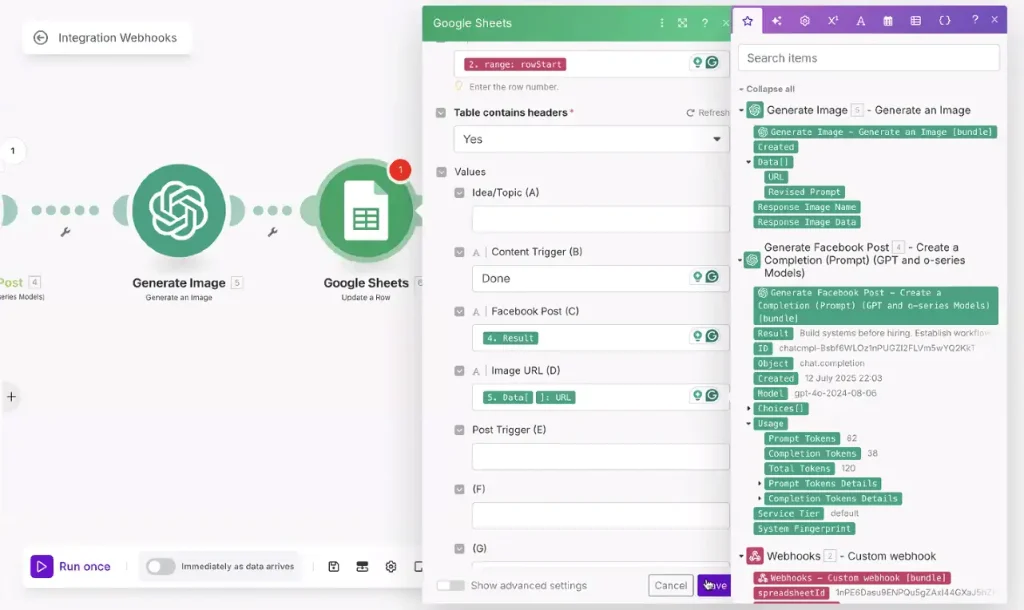
The AI “productivity stack” in 2025 is both a blessing and a minefield:
- Agentic AI: Custom GPT agents that can summarise, draft, and even automate repetitive decisions. Now, there’s a ChatGPT agent that not only replies, but acts on tasks. It taps into a growing toolbox of agentic skills, choosing what to do and how to do it, all from its own virtual workspace. Think of it as your proactive digital teammate, not just a clever assistant.
- No-Code Automation Platforms: Tools like Make.com, Gumloop, promise drag-and-drop workflow creations.
- Application Builder Platforms: Bolt and Lovable are tools designed to be used by people with little to no coding experience. While the advantages project scalability, it’d be more helpful if you have some understanding of programming concepts when customising or troubleshooting your applications.
- Cloud Connectors: Google Drive and API makers to link data across your digital universe. API keys and integration tokens can become costly when running multiple operations due to consumption limits. However, you may wish to consider the free tiers offered by providers such as Google API and OpenRouter.
The theory: More tools = less work, more creativity.
The reality: If you’re not careful, more tools = more context switching, more confusion, and more “pseudo-productivity” (feeling busy, but not moving forward and reaching your end goal).
P/S: I will share more in the next series of posts. ☺️
AI Automation Workflows: From Struggle to Success
The Early Struggles
I started out the way most non-full-stack-developers do:
- Watching YouTube tutorials and testing out template scenarios,
- Joining communities promising “1-click” AI workflows,
- Getting lost in endless lists of “must-have” automation tools.
It took multiple failures and lots of digital clutter before I found a combination that actually saved time. Oh yes! Eventually, you would have to test out all your scenario automation workflows to determine which works best for you and your business:
- My Own GPT Agent: Custom-trained for my brand’s voice, capable of completing my thought processes, drafting initial posts, emails, and even supporting customer queries (without having an intern by my side).
- Make.com: Connected through some apps, api keys, routers and cloud drives for seamless automation (e.g.,: new content drafts waiting to be reviewed by me in rows and columns, topic triggers, and task reminders).
- API Makers: Used just enough to connect the dots, without falling into technical rabbit holes.
- Google Drive: Became my “digital warehouse”, where all drafts, research, and feedback looped in real-time.
The Shift
The secret wasn’t mastering every tool, but experimenting fast and embracing a mindset of iteration.
I stopped worrying about building “the perfect workflow” and focused on shipping good enough processes that I could tweak as I learnt and improvised along the way.
Suddenly, what used to take days to handle drafting, organising, and publishing content, could be easily set up and run in a couple of hours.
Trust me – it wasn’t easy or straightforward. In fact, it took me some practice routines to get wired differently.
Not because I’m a full-stack developer, but because I lean into testing, failing, and refining, using each tool for what it does best.
Are We Working Smarter or Just More?
Here’s the uncomfortable truth: AI can make us more productive, but only if we define what “productive” actually means for us.
Too often, I see:
- People with beautifully automated workflows but no clear outcome,
- Teams distracted by tinkering, not delivering,
- Entrepreneurs drowning in app fatigue, not gaining real freedom.
Productivity isn’t about using every tool; it’s about using the right tools at the right depth, for the results you really need.
How to Spot the Productivity Paradox
- Busy ≠ Productive: Are your tools serving your goals, or are you serving your tools?
- Depth over Breadth: Better to master 2–3 tools deeply than scatter attention across 10 tools.
- Experimentation Wins: Treat every workflow as a draft, not your end-goal destination.
Resilience and determination is key to every automated workflow you are working on.
– Lady in Techverse
Practical Advice: How to Find Your True Productivity Flow
If you’re feeling overwhelmed by the sheer number of AI automation options in 2025, you’re not alone.
Here’s my simple workflow playbook for finding clarity:
| 1. Start Small with Low-Precision Task — Pick One Workflow | What’s your biggest bottleneck? Focus there first. For me, it was full control of content drafting, reviewing and distribution. |
| 2. Always Choose No More Than Four Tools | E.g.,: Your own GPT agent (Get a Plus membership account with Openai), Make.com, Google Drive, an API maker for integration (an API maker if you’re ready). Don’t get seduced by shiny tools; depth is better than breadth. |
| 3. Build for Iteration, Not Perfection | Launch a minimum viable workflow — improve it as you go. |
| 4. Test in Real Time (spend about 2-3 days configuring your workflows) | Run your workflow with real projects, not just sample data. Measure results: Did it save you time? Reduce stress? Increase quality? |
| 5. Keep a “Workflow Journal” | Track what works, what fails, and what actually moves you forward. This is your personal knowledge base for future improvements. |
Here’s my shared personal cheatsheet.
Download the PDF and let me know if you have tried one simple workflow 😆
Join my curated mailing list to receive future content on free AI tooltips, templates, in-depth insights, and cheatsheets.
Conclusion: Real Growth in a World of Infinite Tools
The productivity paradox isn’t about AI making us lazier or busier. It is always about finding our own path through an ever-expanding tech landscape.
You don’t have to be a coder, an engineer, or a workflow “guru” to automate meaningful parts of your business or creative life.
You do need:
- Curiosity,
- A willingness to experiment,
- And the discipline to focus on what truly matters.
That’s the real win.
Not just getting more done, but by doing more of what counts.
Internal Links & Further Reading
- Second Mini Brain: AI Tools, Claude 4 & Ethics
- Digital Decluttering for Mental Wellness
- Increase Profits with AI GPT Agents
- AI Tech & Digital Empowerment for All
- Real Talk on AI, Digital Transformation and Tech
- About Lady in Techverse
Sources Referenced
- McKinsey Digital. (2025). The State of AI-Driven Productivity: Are Businesses Really Winning?
- Microsoft WorkLab. (2025). Work Trend Index: The Rise (and Risks) of AI Automation in Global Workplaces.
- Harvard Business Review. (2025). Why AI Tools Alone Won’t Save You from Digital Burnout.
- Gartner. (2025). Automation Hype vs. Reality: What Executives Are Learning from Failed AI Deployments.
- Personal workflows and lived experiences, Lady in Techverse
Lady in Techverse Digital Sanctuary – Where Digital Innovation Finds Its Voice | Real Talk on AI, Digital Transformation and Tech | Beyond the Buzzwords.
Let’s Build a Digital Story Together
Whether you’re scaling a business, rebranding, or just exploring GenAI, your voice deserves to lead and not be overwritten.
🔗 Continue reading in my digital sanctuary
📬 Contact me here if you’d like to collab.
Come co-create the future ethically, creatively, and confidently.
Frequently Asked Questions (FAQ)
Internal Articles
- Why more than 90% of AI Pilots Fail and How Hyper-Personalisation Wins
- How can CEOs use AI and Leadership to improve Crisis Communications in 2026?
- AI Scams are Surging Fast | 2025
- Digital Decluttering for Mental Wellness with a Proven System
- How Brands Build Human Trust in the Age of Agentic AI, Starting in 2026
- Agentic AI in 2025: Ripples that Signal the 2026 Workflow Tsunami
- Digital Trust in 2025: Governance and Security Shaping the Next Economy
- Data Quality is the Power Move behind every winning AI Strategy in 2025
Visual Content Disclaimer: All images in this post are AI-generated.
The AI Productivity Paradox 2025
#LadyinTechverse AgenticAI #WorkflowAutomation #GPTAgents #GenerativeAI #ProductivityWithAI DigitalWorkflows2025 #NoCodeTools #DigitalTransformation #AIDigitalSanctuary #TechForGood


Leave a Reply