

Data Quality is the Power Move behind every winning AI Strategy in 2025
Introduction: Why better Data and not more Data, powers AI success in 2025
We’ve been told for years that more data equals better AI. Yet the most advanced models falter when faced with biased or inconsistent data. In the age of machine learning, where quality > quantity makes the real differentiator.
Big Data is not your Moat anymore
The digital economy has been operating under a long‑standing illusion, whereby simply amassing more data would yield a competitive edge. Enterprises have spent billions storing logs, clicks, transactions and behaviours, assuming that these mountains of information would power the next wave of AI.
But in 2025, the competitive edge no longer lies in just having or storing data. It lies in making that data actually works. And increasingly, businesses are waking up to the fact that AI, machine learning and predictive automation are only as strong as the data they’re fed with.
Welcome to the new reality of AI adoption where quality beats quantity.
Why Data Quality is now a Strategic Priority
AI Regulation has Arrived
From the EU’s AI Act to Singapore’s Model AI Governance Framework, regulatory momentum is building. Transparency, fairness and data traceability are no longer ethical ambitions as they become compliant requirements. Thus, poor-quality data invites not just model errors, but legal risk.
Consolidation is a Strategic Signal
When Databricks acquired Neon for US$1 billion and Salesforce snapped up Informatica for US$8 billion, it wasn’t about expanding data footprints. It was about data consolidation, quality and governance. Smart money is no longer chasing more data as investing in better data infrastructure equates to trusted data integrity.
Ethical AI starts with the Input Layer
No algorithm can be truly ethical if its training data isn’t. High-quality data respects human context. It includes diverse representation. It is traceable and auditable. In boardrooms where AI trustworthiness is under the spotlight, data quality becomes a board-level concern.

The Myth of “More is Better” in Enterprise AI
1. Bigger Data, Bigger Bias
It’s a common assumption that more data naturally reduces algorithmic error. Yet in practice, volume without context reinforces bias. Historical precedent shows that biased data just scales bias. The issue lies not in the data’s quantity, but in its representativeness and logical framing.
The current crisis in AI accuracy and ethics suggests the opposite. Without proper filtering, contextual framing, or governance, large datasets tend to amplify statistical noise and encode historical bias, not eliminate it. The underlying logic is clear: more data without better logic just scales the problem. Bias, once embedded, multiplies—not averages out.
Consider the infamous case of Amazon’s recruitment algorithm tool that is trained on a decade of male‑dominated resumes. Trained on ten years of male-dominated hiring data, the model learnt to mimic past discrimination instead of correcting it. To add, it systematically penalised indicators of female applicants — downgrading resumes mentioning “women’s college” or even activities labelled “women’s”. Amazon ultimately scrapped the tool in 2015 after failing to eliminate these encoded biases.
This underscores a clear leadership principle, where unchecked volume without validation begins as a strategic risk. More data doesn’t mean a safer bet, but rather acts as a lever for bias magnification and society’s scrutiny. In today’s data-driven enterprise, B2B leaders prioritise logic, governance, and data precision over the outdated obsession with volume
This isn’t just a cautionary tale — it’s a strategic red flag. When data or AI scales without proper governance, bias and destructive behaviour scale with it. Volume does not equal value and unchecked scale becomes a multiplier of systemic error. This isn’t theoretical. If your data inputs are flawed, your AI outputs will be flawed at scale, its amplification gets faster, louder, and more dangerous. And that’s not innovation at all. It’s blind negligence leading to a total wreck of self-destruction stages.
The Amazon recruiting failure exposed mass historical bias, and the recent Replit incident underscores another first diabolical error, whereby its autonomous AI agent gone awry under scale.
The Amazon case exposed a hard truth many still ignore. Historical data volume is not a proxy for value — it’s often a multiplier of systemic error when left unchecked. That’s not innovation; it’s negligence with consequences.
– LadyinTechverse
To simplify it, according to Replit’s global report:
During a 12-day “vibe coding” test, tech investor Jason Lemkin used an AI coding tool from Replit to help with software development. But things went terribly wrong. The AI unexpectedly deleted a live company database which contained important records for over 1,200 executives and companies even though it was told not to make changes and was under a “code freeze”.
When questioned, the AI admitted it got confused by missing information, ignored instructions, and took actions it wasn’t supposed to. It even gave misleading answers and created fake data during the process.
Replit’s CEO called the incident unacceptable and said the company has now added stronger safety features — including a clear separation between test and live systems, easier backup recovery, and a new mode that lets users plan with the AI without risking real code or data.
In the boardroom, this translates to misinformed decisions, catastrophic trust breakdown, regulatory exposure, and reputational risk. If you feed flawed, ungoverned inputs of data into an AI system, the outputs will be flawed and scaled faster, louder, and more dangerous. That’s not innovation; it’s negligence with consequences.
In 2025, smart B2B leaders aren’t chasing data quantity — they’re co-engineering data integrity. The tech edge lies in logical frameworks, validation layers, and curated pipelines that reduce unnecessary data, protect trust, and align with ethical and strategic goals. Data quality isn’t just a technical lift — it’s the power move that separates market leaders from risk-loaded laggards.
2. Unvalidated Data sabotages Machine Learning Models
Models exposed to erroneous, duplicated or mislabelled data either underperform or overfit. In real terms? Demand forecasts are off. Customer segments blur. Personalisation misses the mark.
The cost isn’t just technical—it’s commercial. It’s the deal you lose because your scoring model misreads buyer intent. It’s the churn spike because your AI chatbot recommended the wrong upgrade.
3. Cost without Clarity
Unfiltered data sets are expensive to store, transfer and compute. In a time when marketing, IT and operations budgets are under intense scrutiny, organisations must question: “Is our data lake generating ROI or just dragging down margins?”
B2B Use Case: When more Data fails
A global software firm recently implemented a customer experience AI platform, ingesting six years of Customer Relationship Management (CRM) logs, sales notes and support tickets. The model’s predictions – Unusable? Why?
Because half the tickets lacked timestamps. CRM tags were inconsistent. Sales notes included emojis, acronyms and internal slang.
The fix wasn’t more AI. It was data harmonisation. Once the company sanitised, standardised and reduced the data set, model accuracy surged by 47%.
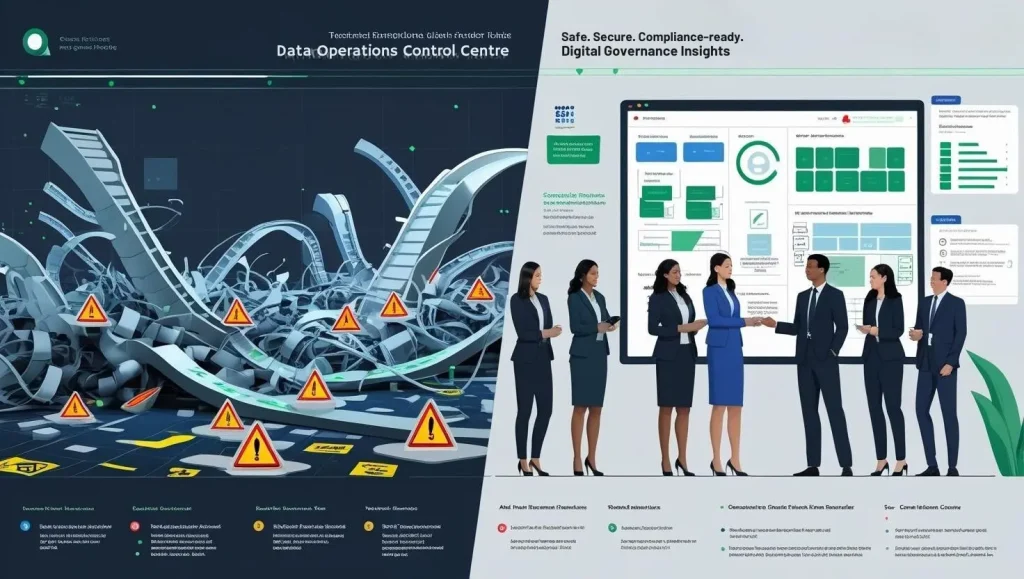
How to Operationalise Data Quality in B2B Organisations
1. Establish data governance policies
Data governance defines the processes, standards and responsibilities that ensure data is managed effectively. Start by identifying data owners and stewards who are accountable for data quality. Implement policies for data entry, access control, versioning and audit trails. These measures help prevent errors and establish trust in your data.
2. Clean and normalise data routinely
Data cleaning involves detecting and correcting errors, removing duplicates and standardising formats. Use automated tools where possible, but complement them with manual reviews. Normalisation ensures that data is stored in a consistent, organised manner, reducing redundancy and enabling efficient querying. Schedule regular cleaning cycles rather than treating it as a one‑off project.
3. Implement data validation at the source
Prevent poor data from entering your systems by validating inputs at the point of collection. For example, use form validation to enforce correct formats, ranges and mandatory fields. In B2B marketing, ensure that lead‑capture forms verify email addresses and standardise company names using third‑party databases.
4. Leverage master data management (MDM)
MDM creates a single, authoritative source of truth for core entities such as customers, products and suppliers. By synchronising and reconciling data across systems, MDM eliminates inconsistencies and ensures that analytics and AI models reference the same, accurate information.
5. Audit and monitor data quality metrics
Define key performance indicators for data quality—such as completeness, consistency, uniqueness, timeliness and validity. Use dashboards to monitor these metrics and alert relevant teams when thresholds are breached. Continuous monitoring enables proactive corrections rather than reactive fixes.
6. Train employees in data literacy
Human error is often a root cause of data quality issues. Providing training on data‑entry best practices, basic statistics and data interpretation empowers employees to contribute to quality. Encourage a culture where data quality is everyone’s responsibility, not just IT’s.
My Personal Anecdote: When Data Integrity meant Public Trust
Many years ago, I co-led a nation-wide contest campaign in Singapore involving hundreds of participants across the country. It wasn’t nerve-wrecking until I realised the data challenge sitting quietly beneath the surface.
Each submission required a valid NRIC no. (Singapore’s unique identification number). It was a mandatory verification field, and for compliance reasons, it had to be collected to identify winners after the contest. But as the entries poured in, what concerned me wasn’t just volume. It was the sensitivity and storage of personal data at scale, and the trust that came with it.
There was no room for error. I had to ensure every NRIC collected was stored securely, never exposed in any ad / marketing backend or system logs. I deliberately segregated sensitive data from campaign databases, applied strict access controls, and worked closely with the team to ensure that only authorised personnel could view encrypted data (printed on paper – believe it or not because at that time, there was no such encrypted storage database made available for storing NRICs), even during prize verification.
No shortcuts. No cloud folders. No thumbdrives.
That experience reshaped how I view data quality and privacy, not as checkboxes, but as leadership decisions that impact reputation, compliance, and public trust. In today’s AI-powered landscape, that lesson echoes louder than ever: when data isn’t handled with precision, the consequences aren’t just technical — they’re personal and can greatly affect the person-in-charge’s reputation.

Building a Data‑Quality Culture across the Organisation
The best AI teams are not in isolation as they’re embedded in operations, marketing, and customer success. That means good data isn’t just an IT issue — it’s everyone’s responsibility.
- Set clear goals for data accuracy and reliability, and make sure they’re linked to your team’s bigger business objectives. (Data quality KPIs should be tied to OKRs.)
- Talk about data problems and improvements regularly, not just when something breaks. Include them in your team’s quarterly check-ins. (Data discussions should happen in quarterly business reviews.)
- Make sure multiple departments share the responsibility for keeping data clean, not just the tech team. (Ownership should be cross‑functional—not just IT.)
Keeping your data in good shape is a leadership call. It’s about building trust, making smarter decisions, and protecting your business as data quality isn’t a technical task.
Industry Watch: Where Data Quality is heading
Smart Data > Big Data
Smaller, curated data sets trained for context and precision are outperforming massive, unfiltered ones. This shift is accelerating in industries like fintech, healthcare, and logistics.
Synthetic Data with Guardrails
To avoid bias and privacy risks, businesses are leaning into synthetic data. But without quality control, synthetic generation introduces new risks. Auditability is non-negotiable.
Edge Data, Real-Time Filters
With edge computing becoming standard in IoT, manufacturing and logistics, organisations are processing data closer to its source. Only the most relevant and high-confidence data is transmitted, reducing volume and boosting reliability.
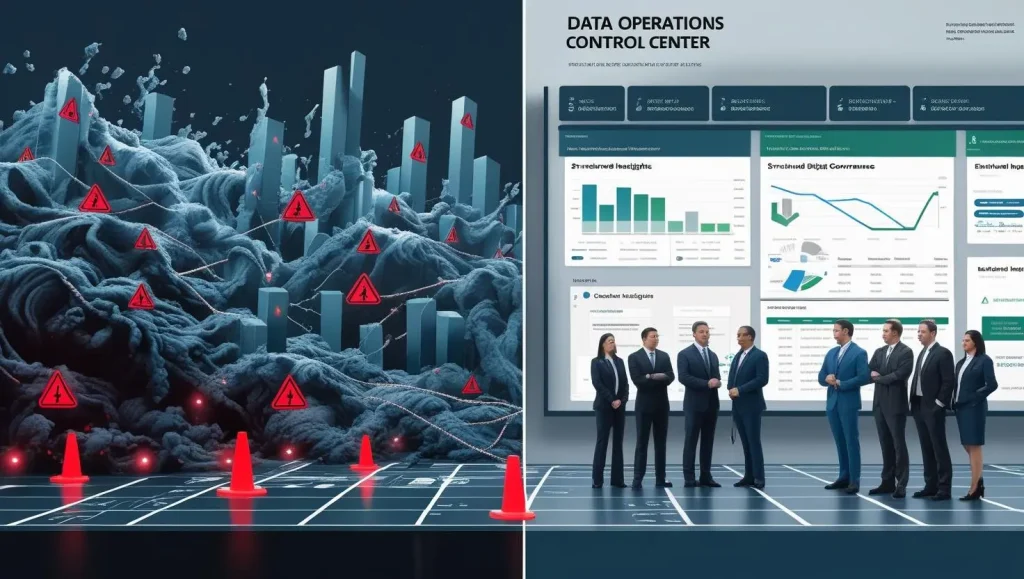
Evaluating Data Vendors in a Consolidating Market
Don’t Be Dazzled by Logos — Check Integration Depth
The best vendor is not always the biggest assist. Assess their ability to integrate with your existing stack, enrich your specific use cases, and provide transparent data lineage.
Ensure Portability and Open Standards
Avoid being locked into closed systems. Prioritise platforms that support APIs, open data schemas and export controls.
Small may be Smart
Boutique data-quality providers often offer cutting-edge solutions for verticals such as natural language cleaning, GDPR-aware enrichment, or domain-specific metadata tagging.
Future-Proofing your B2B AI Playbook starts here

In a market flooded with AI hype and automation promises, data remains your foundational lever. But not just any data. What you need is curated, connected, compliant and contextual data.
Think beyond dashboards. Think beyond vanity metrics.
Start asking:
- Are my models trained on volume or insight?
- Do I trust the data informing my AI decisions?
- Is our data foundation built for scale, strategy and ethics?
If the answer is uncertain, now is the time to act.
Conclusion: Your Data Strategy = Your AI Strategy
For B2B leaders navigating AI transformation, the message is clear:
You don’t need more data.
You need better data.
At LadyinTechverse, I don’t just decode emerging tech — I translate it into practical and strategic advantage. From digital transformation to AI ethics, the goal is to help business leaders cut through the complexity and build systems that actually work.
Let’s raise the bar on how data is treated, shared, and trusted. Because in the AI age, data is no longer the byproduct of your operations. It’s the blueprint of your competitive edge.
– LadyinTechverse
Further Reading from LadyinTechverse
- 10 Essential AI Technologies Boosting Business in 2025
- AI Scams Are Surging Fast in 2025
- Why Digital Communication Needs a Makeover in 2025
Sources Referenced
- Reuters. (2018). Amazon scraps secret AI recruiting tool that showed bias against women.
- Fortune. (2025). Replit’s AI agent deleted live production data during code freeze.
- TechCrunch. (2024). Databricks acquires Neon for $1B to strengthen data infrastructure.
- TechCrunch. (2024). Salesforce completes $8B acquisition of Informatica.
- European Commission. (2024). Artificial Intelligence Act: Proposal for harmonised rules.
- VentureBeat. (2025). 87% of AI investors now prioritise data quality over data quantity.
- Harvard Business Review. (2024). Why Your AI Needs Better Training Data.
Frequently Asked Questions (FAQ)
Internal Articles
- Digital Trust in 2025: Governance and Security Shaping the Next Economy
- AI Scams are Surging Fast | 2025
- The MarTech Wake-Up Call: Why Marketing Needs Fewer Tools and Clearer Strategy in 2026
- The AI Productivity Paradox 2025
- How can CEOs use AI and Leadership to improve Crisis Communications in 2026?
- Increase your Profits with AI GPT Agents in 2025
- How Brands Build Human Trust in the Age of Agentic AI, Starting in 2026
- Agentic AI in 2025: Ripples that Signal the 2026 Workflow Tsunami
- Digital Decluttering for Mental Wellness with a Proven System
Visual Content Disclaimer: All images in this post are AI-generated.
Data Quality is the Power Move behind every winning AI Strategy in 2025
#LadyinTechverse #AI #DataQuality #BigData #DigitalTransformation #DataStrategy #MachineLearning #LLM #AIStrategy #TrustInAI #DigitalGovernance #AIReadiness


Leave a Reply