

AI Overviews are Reducing Your Clicks: How Brands Stay Visible When Search Stops Sending Traffic
[Author’s Note]
At the juncture of a booming AI era, my journey through a very messy and noisy landscape has been much less of a structured learning and more skewed towards a multi-step approach equipped with adaptability and agility, rather than a fixed learning and building journey. In this post, I share the intricacies and the revolution of how Google AI Overviews, and AI Citations and References have evolved over the past few years via Google, Bing, other search engines and independent search browsers and search engines, as well as AI-assistant platforms like ChatGPT, Gemini, Perplexity, Grok, Claude, etc.
| STEP 1 | STEP 2 | STEP 3 | STEP 4 | STEP 5 | STEP 6 | STEP 7 | STEP 8 |
|---|---|---|---|---|---|---|---|
| LEARN | TEST | TRIAL | EXPERIMENT | ITERATE | IMPROVE | RESET | BACK TO STEP 1 |

If you still measure content success by clicks and engagements alone, AI Overviews can make your marketing playbook look weaker than it already is. In my previous post, one of the things I have mentioned was that AI is here to amplify the foundations of your work, be it in business operations, finance processes, procurement workflows, centralised hub, and many more.
What AI Overviews change for marketing in 2026
Search used to behave like a hyperconnected bridge. Internet users typed a question, they clicked a link, and your website did most of the work.
Now, search results can answer questions directly. AI Overviews, conversational search, and generative answers can intercept intent before a click happens. That changes what “visibility” actually means.
You can still rank well on Google and still lose clicks.
That is not your fault. It is affected by an AI shift in how discovery works these days.
This is where Lady in Techverse stays practical. You cannot control every platform change, but you can control how clearly your brand explains what it knows at its best foot forward in the AI trenches.
Why clicks fall even when influence rises
All round the world, Marketing teams built a simple mental model for years.
- Rank higher
- Get clicks and stronger UI heatmaps
- Convert visitors
When the results page answers the question, fewer people scroll their browsers because most people want convenience with the essence of time they would have. Your content can still shape decisions, but your analytics will not show it as ‘traffic’ or let alone as ‘referrer’.
That creates a consistent key stakeholders’ problem. Your work can drive outcomes while your dashboards look flat, or even worse like below the baseline.
If you want to lead in 2026, you need to continuously update your strategy; always include a ‘trial-and-error’ until your marketing operation system and your reporting language syncs at the same time.
Download AI Overview Citation Visibility Index Scorecard by LadyinTechverse (.XSLX)
Please complete the form below to receive the download link.

file size: 75kb from a shared Onedrive folder
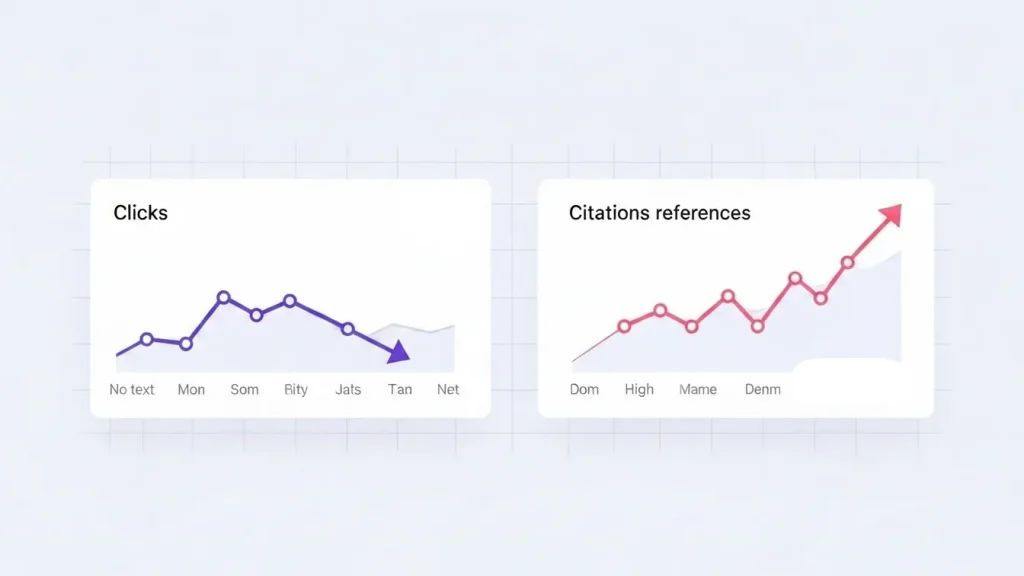
From Click Economy to Citation Economy
The citation economy, and what it rewards.
The old question was, “How do we get the click?”
The new question is, “When AI answers this question, does it cite us?”
That is the citation economy. Visibility shifts from visits to references.
AI systems tend to reuse content that is easy to interpret and safe to present. In usual practice, that means:
- Authority beats volume
- Structure beats length
- Clarity beats cleverness
If your content explains a topic properly, it becomes easier to quote, summarise, and recommend. That is somewhat how Generative Engine Optimisation (GEO) and Answer Engine Optimisation (AEO) in action. You design and structure for how answers get generated and consumed.
Google claims that AI Overviews cannot guarantee consistent long term cited references.
It is unrealistic to state that once your website is setup for a citation-ready structure, it will get cited on Google AI Overviews and other AI-assistants. This is hardly the case, and it is distorting beliefs of many.
1) You and I cannot guarantee citations
Google explicitly says that even if you meet requirements and best practices, indexing and serving targeted keywords are not guaranteed. Therefore, technically “earn citations” cannot be positioned as a guaranteed outcome.
2) AI Overviews do not trigger consistently
Google states AI Overviews appear only when its systems decide they are additive, and they often do not trigger.
Semrush also reports volatility in how often AI Overviews appeared across 2025, which reinforces that you cannot promise exposure on a fixed schedule.
3) AI Overview sources change over time
Pew notes that an AI summary for a given search can change over time, and their analysis reflects a specific snapshot in time.
That makes “citation earned” hard to certify as a stable KPI for many modern marketers, thus, citations are here as part of an ongoing AI research.
4) Measurement is imperfect
Google says AI feature traffic is included in Search Console performance reporting, but it does not mean you can cleanly isolate “AI Overview citation performance” as a single line item for performance marketing purposes.
What the data says about clicks and why citations matter
It is essentially important to talk about a click decline risk, but you should ground it in credible findings:
- Pew found users were less likely to click web links below when an AI summary appeared, and clicks on links inside the AI summary were rare in their dataset.
- Google, on the other hand, has claimed that links in AI Overviews can get more clicks than a traditional web listing for that query.
These two can both be true in different contexts because query type, intent, and layout may vary. The safe position is click behaviour shifts, and you should build visibility beyond clicks and around your published content out there.

Why content structure matters more than content volume
Generally, its natural for teams to feel the pressure, and having to often publish more content in a more or less fixed schedule, like weekly to monthly content planning. On top of that, it no longer used to be just Facebook, Instagram, LinkedIn and YouTube. We now have more social media platforms that are unimaginably scaling and evolving constantly. Forget about dimension sizes of visual assets. We also have a buffet of social platforms to choose from – I would recommend to choose wisely. 🥹
Of course, as a marketing practitioner in my personal and professional capacities, it’s probably ingrained in me – our beloved ‘The usual content marketing stuffs: More blog posts. More thought leadership articles. More whitepapers. More long-form pieces and short-form pieces. More influencers, and so on’.
Volume does not fix a weak structure or offer you band-aid moments. It can make it worse by spreading your topic focus too wide and less niche. In my past experiences, I had to avoid closing down a few social media accounts because it was hosting legacy social content that drove a company’s or a brand’s search fundamentals. If I had a choice, I would rebuild the content from the ground up; speaking from a former Instagram micro influencer perspective and a Marketing and Communications professional.
P.S.: I used to run my own pet cat account and a sports figure account, on top of my profession managing social media accounts.
If you want AI-friendly visibility, your pages need to help a reader, and an AI system understand your key points fast.
Use a simple structure that works across most B2B topics:
- Define the topic in the first 50 to 80 words
- State why it matters commercially (for profits) or social impact (for non profits)
- Explain the mechanism to formulate step by step structure
- Give a checklist or a decision rule
- Wrap it up with what to do next
You only need clear and proper signal.
Authority is inferred, so generic content loses

In classic SEO, authority lean heavily on backlinks and keyword relevance (On a side note: I shall digress a little bit because my new blog is slowly crawling on off-page strategy due to lack of time and commitment. If there is a freelancer out there who wants to build his/her portfolio in SEO backlinking, please contact me and I’d be happy to discuss with you ☺️). No SMBs or marketing agencies allowed.
In AI-mediated search, systems also infer authority based on consistency and focus. Generally, AI prefers brands that stand out for something more specific. It needs stable signals to associate you with a topic.
If your site covers everything (like a general wikipedia), it becomes harder for AI to learn what you own. And if your site builds depth in a narrow set of themes, it becomes easier for AI to cite for you.
For Lady in Techverse, those themes can stay consistent and useful:
- AI and marketing operations
- Digital transformation and workflow design
- Measurement, governance, and trust
- Practical adoption that protects quality and time (if necessary)
My Personal Anecdote
Over these one to two years, I have seen posts with modest traffic outperforming higher-traffic pages because AI systems referenced them more often when explaining the specific topic or in the subject matter expert domain. Those pages had somewhat clear definitions, tighter structure, and a consistent point of view.
What to measure when traffic drops
Back then, website clicks were comforting because they were measurable and simpler for stakeholder reporting.
Citations feel less visible, but you can still measure influence. You just need a better system.
Track a mix of signals that align with B2B buying behaviours:
- Branded search trend
- Direct traffic trend
- Reply quality in outbound campaigns
- Meeting quality, such as decision-maker attendance and next steps
- Sales feedback on where prospects discovered you
- Shortlist frequency in procurement conversations
This is not about giving up on measurement. It is about measuring what buyers actually do.
A practical visibility system you can run next month

Here’s the multi-step journey from LadyinTechverse
You do not need a new tool to start. You need a structured workflow. Below is an example of what Lady in Techverse will approach with.
Step 1: Pick one topic you want to own
Choose one problem your audience cares about and you can explain better than most.
Example: “Search and buy [my hero products or core services] in 2026”.
Step 2: Publish one landing page
Make it the best explanation on your site for that niche topic.
Include:
- A clean definition
- A simple framework
- A checklist
- A short FAQ
Step 3: Write your brand entity pack
Goal: create consistent signals about who you are and what you own.
Do this
Write one internal doc with these fields:
- Brand name, and preferred spelling
- What you do in one sentence
- Who you serve
- Problems you solve
- Your core terms, with definitions
- Proof points, such as results, case studies, client types, credentials
- Topics you will publish on, and topics you will avoid
Output
- One entity pack you reuse across About, services, author bio, and content briefs
Step 4: Publish two to three supporting pages
Each supporting page should answer one adjacent question.
Examples:
- What AI Overviews are, and why they matter
- Why zero-click changes reporting and CAC narratives
- How to structure content for citations
- How to provide helpful answers to search queries on AEO
Step 5: Add internal links that make your position consistent
Link your cluster together so your site has a clear topical map.
You can also link to relevant LadyinTechverse latest posts, page 2 or page 3 as your supporting context:
- Increase your Profits with AI GPT Agents in 2025
- Beyond the Prompt: What Generative AI really means for Your Business, Brand and Future
- Building Your Second Mini Brain in 2025: AI Tools, Digital Ethics, and what Claude 4 Taught Us About AI Boundaries
- Why Digital Communication Needs a Makeover in 2025
This reinforces your topical authority, and it supports LLM-SEO signals through consistent entity and conceptual links.
If you do link back to me on any of my posts, feel free to let me know on this contact form. Happy to credit you in return and so forth. ☺️
Step 6: Add citation-ready blocks
Goal: make your content easier to reuse and harder to misinterpret.
Add two reusable blocks across the cluster:
- A “Definition and scope” block
- A “What to do next” block
Optional blocks if relevant:
- A short comparison table
- A checklist with tick boxes
- A “common mistakes” list with fixes
Output
- Two blocks you can reuse across future posts to strengthen consistency
Step 7: Tighten internal linking and site structure
Goal: clarify your topical map for readers and systems.
Do this
- Link every supporting page back to the flagship page
- Link the flagship page out to each supporting page
- Add a “Related posts” section pointing to existing LadyinTechverse pieces:
- Increase your Profits with AI GPT Agents in 2025
- Beyond the Prompt: What Generative AI really means for Your Business, Brand and Future
- Building Your Second Mini Brain in 2025: AI Tools, Digital Ethics, and what Claude 4 Taught Us About AI Boundaries
- Why Digital Communication Needs a Makeover in 2025
Output
- One coherent internal linking cluster that reinforces topical authority
Step 8: Publish your measurement plan for the new reality
Goal: report influence even when clicks fall.
Build a one-page reporting view
Track these weekly for 8 weeks:
- Branded search trend
- Direct traffic trend
- Buyer intent signals, such as inbound form quality and demo requests
- Sales feedback, “where did you hear about us”
- Outbound reply quality, if outbound is part of your engine
- Manual citation checks for your priority queries
Output
- A reporting page you can share with leadership without relying on click volume

Final Reflection
At the end of the day, AI Overviews did not break your marketing playbook. They exposed a fragile dependency on clicks as the primary proof of value.
Brands that win in 2026 will do three things well:
- Explain clearly
- Build depth in a well-defined domain
- Measure influence, and not only visits, clicks and engagements
That is the Lady in Techverse approach. You build a digital sanctuary that cuts noise, strengthens trust, and turns complexity into execution.
Google does not offer a guaranteed path to appear in AI Overviews, and there are no special optimisations that force inclusion.
You would still need strong SEO fundamentals, indexable pages, and helpful content. This checklist is a 7-day sprint to build citation-ready foundations, so your brand has a better chance of being selected as a supporting source when AI Overviews do appear, and so you can check back on the progression.
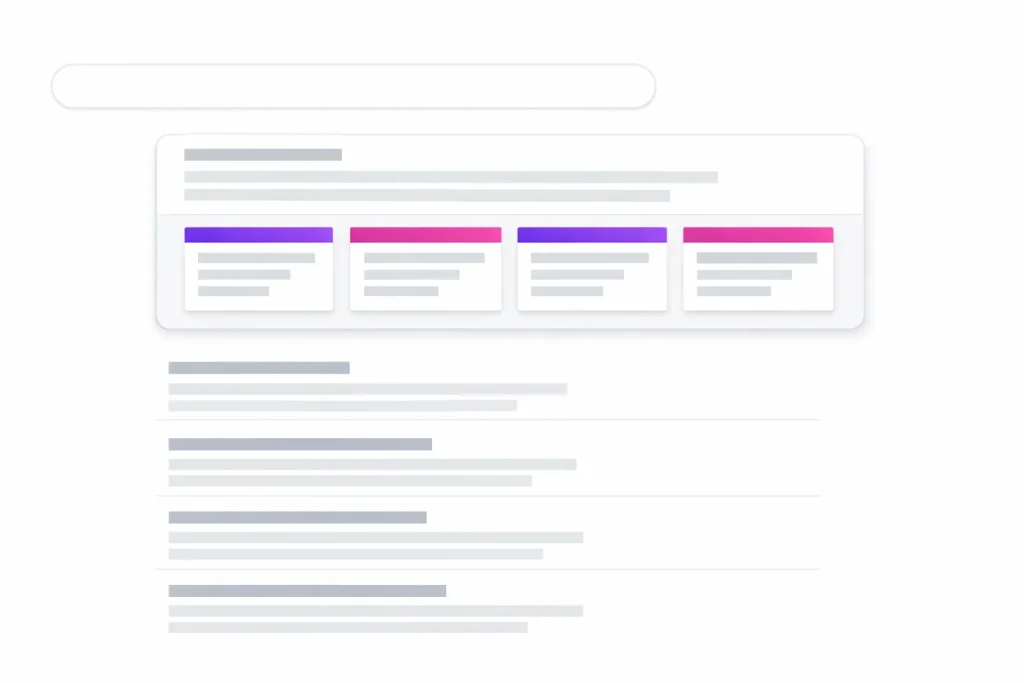
AI Overview Citation Visibility Index Scorecard by LadyinTechverse
Citation-Ready Query Map and Coverage Scorecard
If AI Overviews reduce your clicks, you still need a way to prove visibility and influence without guessing. This download gives you a practical scorecard you can run in under an hour.
What you get
- Query Map template (20 queries) to track where AI Overviews appear and which sources get cited
- Coverage Scorecard that outputs a score from 0.00 to 1.00
- Clear scoring rubric so results stay consistent across teams
- Mandatory input fields so the score is not based on partial data
- A simple calculation workspace so readers can audit the logic, not just trust it
What this is, and what it is not
This scorecard is a benchmarking heuristic, not a prediction engine.
It will not tell you whether Google will show an AI Overview or cite you.
It will help you track what you observed, compare topics and queries, and prioritise what to improve.
How the score works
For each query, you will record:
- Wi (1–5): how important the query is to your pipeline
- Ai (0 or 1): whether an AI Overview appeared
- Ci (0 or 1): whether your brand was cited
- Pi (0.0, 0.5, 1.0): how prominent the citation was, based on a simple rubric
Per query:
- Qi = Wi × Ai × (0.70 × Ci + 0.30 × Pi)
Overall:
- Coverage Score = ΣQi ÷ ΣWi
This structure separates category exposure from your citation performance, and keeps the weighting focused on business value.
Download AI Overview Citation Visibility Index Scorecard by LadyinTechverse (.XSLX)
Please complete the form below to receive the download link.
file size: 75kb from a shared Onedrive folder
Frequently Asked Questions (FAQ)
Sources Referenced:
- https://www.pewresearch.org/short-reads/2025/07/22/google-users-are-less-likely-to-click-on-links-when-an-ai-summary-appears-in-the-results/
- https://developers.google.com/search/docs/appearance/ai-features
- https://www.semrush.com/blog/semrush-ai-overviews-study/
Internal Articles
- The MarTech Wake-Up Call: Why Marketing Needs Fewer Tools and Clearer Strategy in 2026
- The Future of Digital Marketing 2025: Voice, Visual and Search Experiences
- How Brands Build Human Trust in the Age of Agentic AI, Starting in 2026
- Increase Profits With AI GPT Agents
- The AI Productivity Paradox 2025
- How can CEOs use AI and Leadership to improve Crisis Communications in 2026?
- Data Quality is the Power Move behind every winning AI Strategy in 2025
- Beyond The Prompt: What Generative AI Really Means For Your Business
Visual Content Disclaimer: All images in this post are AI-generated.
AI Overviews are Reducing Your Clicks: How Brands Stay Visible When Search Stops Sending Traffic
#LadyinTechverse #AISearch #ZeroClick #MarTech #DigitalTransformation #ContentStrategy #BrandVisibility #AEO #GEO #LLMSEO


Leave a Reply