

The Future of Digital Marketing: Voice, Visual and Search Experiences
If your brand is only optimised for a search box, you are invisible to how discovery actually happens across other interfaces and screens. These days, users generally search by speaking, scanning, swiping, and consuming quick summaries. The visibility from a search outcome is not just about ranking as it’s about showing up where curiosity begins.
The Discovery Landscape has changed and so must our Marketing
Search is not a final destination of a location. It is an experience that starts before a question is typed and continues long after an answer is given. Users tend to ask a smart speaker while on the move, circle something on their screen, or spot a product in a video, then tap, save cart or image, or buy. Google itself has shifted the narrative by integrating AI Overviews that provide instant context, which means fewer links surfaced and more answers condensed into a single section. “Google began rolling out AI Overviews to U.S. users in May 2024 and said it expected to bring the feature to over a billion people by the end of 2024.”
Marketers used to focus attention on one to three dominant algorithm valleys. The reality in 2025 is different, as we have come across tidal waves of different digital interface terrains, whether they are on-screens and off-screens.
It has grown to become a multi-set of skills in designing and crafting for phones, cameras, social feeds, inside AI summaries and more. If a brand is not visible at the point of curiosity, whether spoken, scanned, swiped, or as suggested, it may not be in the conversation for curiosity. But that’s not to say the brand is late to the game. The search and discovery landscape will continue to knead, flatten and evolve the market. And staying ahead of the rat race does not mean your brand presence will win. It is dependable on the industry, the size of the brand, market share, brand equity and visibility.
I hope we can all learn something from here; a somewhat brief practical blueprint.
Let’s take a look at these components that make up a persistent search:
- how voice and visual search have become habitual behaviours
- how AI summarisation is restructuring user journeys without actually killing search
- why social platforms are now full-funnel discovery engines
- how ethics and zero-party-data underpin trust
- how phygital experiential loops turn intangible products into hybrid or digital packaging, QR codes and Augmented Reality (AR)
The aim is to set clear practical usage for users, and where the numbers really matter; that’s where they are cited across search interfaces.
Voice and Visual Search are becoming Users’ Primary Behaviours
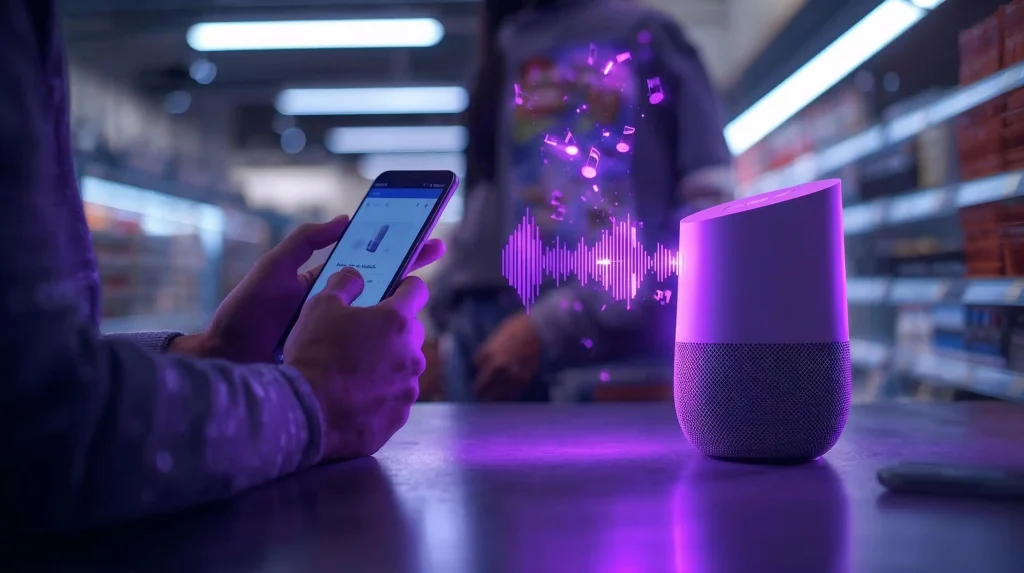
Voice queries and image-led discovery are no longer gimmicks as compared to a few years ago. They are how everyday users bridge the gap between intent and information while being on-the-go.
The numbers that really matter
Google Lens is used for over 20 billion visual search queries every month with about one in four visual searches having commercial intent, according to Google’s own marketing research hub.
Estimates suggest over 1 billion voice searches happen each month as consumers adopt hands-free behaviours on-the-go. This can appear as directional for AR that’s not definitive.
Pinterest’s own business research points to a broadened visual mindset. In an Adobe-commissioned study highlighted by Pinterest, 36 percent of respondents said they now start searches on Pinterest rather than traditional search engines, and 73 percent felt Pinterest’s visual results outperform traditional search in some tasks.
What this means for content design intelligence
Design for questions people actually ask. Build pages in a natural language Q&A structure. Use succinct questions, then answer directly in the first two lines.
Describe images for intent, not only for compliance. Alt text should reflect how a user would search for e.g., “spicy cheese beancurd, creamy tomato base, pantry snacks, 15-minute-prep dinner”, and not just “a bowl of curry”.
Descriptive texts are growing to become a norm in search these days due to the frequency queries input across AI models like ChatGPT, Gemini, Grok, Claude, DeepSeek, etc. A list of typical long tail keywords may perform better than a typical short tail keywords for some industries on SEO via Google Search, despite it being a long-term practice for some enterprises.
Define and connect pixels to context. Pair some images with structured data, markups, and captions that echo search phrases, and internal links that complement the journey.
Add schema to help AI engines interpret. Structured data is not a ranking magic trick since it is how you explain entities, relationships, pricing, availability, and reviews to learning machines that are required to summarise a page.
Just like a Photoshop design process, think in layers and how you can link them according to the structured data, like image with metadata, schema, background context and internal links can equate to discoverability.
Internal read: For schema and subpage clarity, align with strong data practices. See my take on avoiding dirty data and brittle automations in Data Quality is the Power Move Behind Every Winning AI Strategy in 2025.
AI is not replacing Google because Restructuring the Journey is the way to go
There is a blunt but important truth, whereby reports have surged about Google Search is dying and will be taken over by Perplexity, ChatGPT, etc. Alphabet’s Q2 2025 results show Google Search and other revenues grew to roughly 54.2 billion USD, up 12 percent YoY, which underscores that people still search in high volumes, and advertisers still spend where intent signal is concentrated.
What is changing is how results are served. AI Overviews and other generative features condense answers into a single block. Publishers have reported meaningful traffic drops on some result types, especially where quick answers suffice because the 3-step-clicks are less often happening. Various industry analyses since the 2024 U.S. rollout have documented CTR declines for certain queries, even if the exact percentage varies by niche.
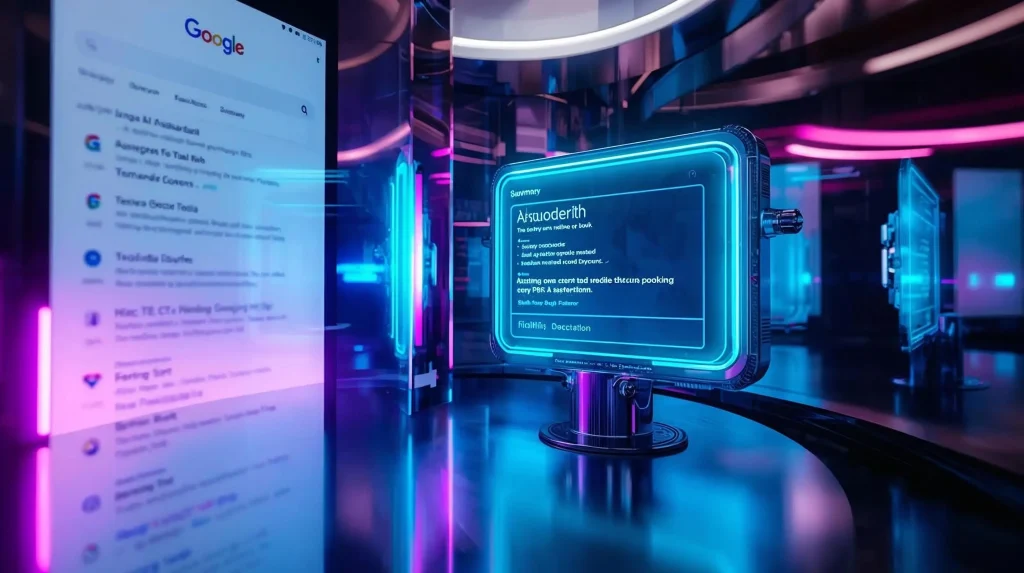
Current SEO reality
When an AI assistant does the summarising, being quoted becomes the goal. You win by earning citations inside the overview, as well as appearing in the traditional organic list.
Four adjustments that will work for now
Write for evidence: Put the original insight in the first hundred words of each section, include a data point or a named framework, and cite the source. AI systems look for clear and attributable statements.
Build authority clusters: Use internal links to create topic gravity. If you have five pages about ethical personalisation, interlink them in a way that signals a coherent hub, then link out to a primary source.
Maintain scannable FAQs: Audit and control qualified answers with clear verbs. AI Assistants generally prefer clean extractions and quick summaries.
Be quotable: Write sentences that can fly for e.g., “AEO is not a white hat magic trick as consistent content with clarity addresses its origin source, aside from speed.”
Reference: Google confirmed AI Overviews would reach hundreds of millions at launch with a stated intention to reach over a billion by the end of 2024. That rollout set the stage for this restructuring of journeys.
Social Commerce is escalating to become a giant discovery search engine
The funnel is mismatched and compressed. Discovery, validation, consideration, and purchase can unfold in a single session, sometimes in minutes, and sometimes in seconds. All of this is because free information and education are widely shared to consuming social users. The temptation to post in some high-following territories of these influencers can amount to high visible comments with engagement. Thus, driving up the influencer’s account that can triple its visibility based on its algorithm effects. In today’s context, it has been known that people have opened up social media farms to automate farm likes, comments and engagements in order to drive up some scammy accounts to gain followers. Global consultancies have modelled the category’s growth beyond two trillion dollars by 2025, driven by creator-led formats, short video, and frictionless checkouts.
TikTok’s role has shifted from “entertainment first” to “search plus shopping” for younger audiences. Just this month, Pew Research reported that one in five American adults regularly get news on TikTok, and among adults under 30. The estimated figure is 43 percent. This is a huge behaviour signal about where people generally look for answers and authority in terms of speed, and not just for cheap trashy entertainment memes.
Instagram Search opens to Google in 2025
In the last few months, Instagram has begun allowing Google and other search engines to index public content from professional accounts. The rollout started in July 2025 and expanded by region. Practically, this means eligible Reels, photos, carousels, captions, and hashtags can surface on Google for non-logged-in account users of Instagram. It can turn Instagram from a mostly-closed discovery garden into a web-searchable content, which can drive incremental organic visibility beyond the app itself.
Firstly, this feature is still rolling out and not for all content types, profiles, or regions that behave identically.
Secondly, while longer existence of help pages have suggested, Instagram was generally discouraged to index. This indicated a policy shift, as industry reporting for public and professional accounts with opt-out controls, have shown blanket indexing for everyone. Treat this as an opportunity, but verify your own profile settings and run live searches to confirm inclusion (where necessary).

How to optimise Instagram for Google discovery this quarter
Switch to or confirm, a public professional account: Review the new indexing setting. If you need to limit visibility, use the opt-out. Then test a few branded and non-branded searches to see what appears.
Write captions like you would for a meta description: Lead with the task or intent, include a concrete noun and a qualifier, and avoid queen’s words or complex jargon. Early indexing tends to favour clear and query-matching language.
Treat each post as a super lightweight landing page: Align the post title text in the creative, the first two lines of the caption, and the hashtags with the same intent phrase you target on your site. Then add a profile link that routes to a matching pillar webpage.
Standardise alt text on images: Describe the task and not only the object for e.g., “MAC lipstick shade match for warm undertones are edible by Doja Cat”, which mirrors how users search.
Measure inclusion and impact: Track whether key posts start appearing for target queries, then compare assisted sessions and conversions against your baseline.
My Personal Anecdote with former TikTok
Several years back, I saw my Gen Z relative using her fingers and arms to dance in front of her mobile phone, which I found it odd and funny at the same time. To my surprise, my relative then came over to ask me to join her. I then politely refused her since I am a Millennial, and to me, this is really silly and s****d. After her several attempts of coaxing me, I decided to do this one time for her so I contributed my finger dances alongside hers and couldn’t stop laughing. 😂
Wanna know what the mobile app was? Musical.ly, which was acquired by ByteDance Ltd., and has now become the rave among many generations as TikTok. Before Musical.ly, it was a karaoke-lyrics sort of app, which I used briefly before retiring from it (I can’t actually remember what was the name of the app).
Some years later after I watched TikTok’s search behaviour up close, it actually changed my mind. I saw a local brand drive its weekly sales from short, caption-led demos, comment replies that doubled as FAQs, and a live session where inventory sold out within 30 minutes. The discovery did not begin with a typed query, since it already targeted users with viewing and searching intent algorithm that began with curiosity, social proof, then instant checkout in minutes.
How to show up in social search
Translate core articles into bitesize stories. A 1,800-word blog on ethical personalisation should become a 30-second explainer, a live casual Q&A, and a carousel that answers the three questions buyers normally ask.
Use UGC and creator validation. Your claim is stronger when a creator explains it in their own words, and in their own format.
Align keywords across surfaces. Match your sentences to captions and alt text. Treat the video title like your short or long form tail keywords.
Setup properly. Track social pixels, server-side events, and coupon codes per platform to attribute real conversions rather than just metrics.
Search has become quite deeply emotional and where Ethics still matter
Today, AI-generated summaries work because they reduce cognitive load and feel more personalised. That does not mean that permission is granted to overwhelm targeted users. Even if you put up a paywall alternative, you still need to prove users are not coerced into tracking.
This is where zero-party data matters. Forrester defined it as data customers intentionally and proactively share with a brand, such as their preferences, purchase intentions, and how they want to be recognised. That is the backbone of ethical personalisation.
Practical, ethical personalisation
Ask before you act: Use preference centres, checkout surveys, and interactive quizzes that clearly explain the value exchange of information.
Minimise and anonymise: Collect the least criteria you need, then model behaviour at an aggregate level where required.
Document consent journeys: Keep records of what was asked, how, and why.
Design for opt-out control: The user experience should remain useful even when tracking is limited.
Reinforce trust: Your content should make sense even without a cookie. Your product should be discoverable even if advertising is not used.
Discovery is an Infinite Loop, and it is no longer a Linear Funnel

QR codes on packaging will lead to demos and app downloads. AR try-ons reduce uncertain purchases and product returns. A single scan at a pop-up shop can trigger a personalised sequence of content and offers. Retail, eCommerce and Tech outlooks across 2025 continue to emphasise omnichannel integration and phygital experiences because that is where confidence and conversion actually grow.
What to deploy next quarter
Link the physical to the digital: Place QR codes where intent peaks, such as receipts, box inserts, and retail shelves.
Offer AR where fit and finish matter: Furniture scale in a room and beauty shade matching are now standard expectations, not novelties. Shopify’s retail resources highlight how brands use AR to enrich relationships and ease purchase decisions.
Create content that repurposes to multi-formats: Publish a comprehensive guide, then ship a matching video, a carousel, an FAQ, and image alt text that mirrors query phrasing.
Being instrumental with intent: UTM for offline scans, server-side tracking for app hand-offs, and a clear success metric for each surface.
From SEO to AEO, LLM-SEO and GEO
SEO still matters in this age as a foundation pillar for web search, so do Answer Engine Optimisation (AEO), LLM-SEO, and GEO.
AEO is known for being the best short and structured format like FAQs, snippets, and schemas. Tight paragraphs, explicit citations, and clear entities will help AI assistants to quote you.
LLM-SEO is known for feeding AI models with unambiguous and well-structured knowledge format. Think subpages, canonical definitions, and diagrams with text alternatives.
GEO covers generative engines across platforms, including social search and retail AI that generates bundles, comparisons, and recommendations.

Here’s your 5-part Optimisation Checklist
Clear webpage: one page per core concept with a defined paragraph and internal links to usage, examples, and FAQs.
Evidence above the fold: place your social proof in the first screen on mobile.
Schema depth: Article, FAQ, Product, and Review where relevant.
Verified Author: short bio, credentials, and a link to your About page.
Performance: TTFB, CLS, LCP, and INP tuned for mobile. If you run WordPress, keep hosting and plugin footprints under control. For server hosting selection help, see my Web Hosting Comparison.
Be the awesome sauce for AI Quotes
If summarisation engines show fewer links, being in the summary is the new visibility. Below are three shakeable moves to raise your chances.
Original research light: You do not need a 40-page report. Five customer interviews synthesised into a three-chart post is enough to be unique.
Named frameworks: If your process has a shape, name it for e.g., the elemental actions to define Scan, Explain, Evidence.
Reproducible insights: Share a repeatable calculation or checklist for AI assistants to look for concrete steps as much as facts.
Support this with internal clusters for e.g., link your ethical personalisation piece to your cookie consent explainer, your zero-party data framework, and your “consent or pay” stance.
The Content Systems that Win in 2025
Q&A content library
Each core topic has a pillar page and 10 to 20 Q&A leaves.
Each Q&A uses one question as the H2, a 50 to 80-word direct answer, then supporting detail and a source.Add FAQ schema selectively for your top 10.
Visual search enablement
Curate a library of images that answer questions. Use alt text for intent phrases.
Where appropriate, add HowTo and Recipe schema with step images that match common visual queries.
Phygital experience loop
Put a QR on inserts, packaging and event lanyards. The scan resolves to a mobile-first guide with a newsletter block and a discount that expires in 72 hours.
Use UTM parameters to isolate offline scans among online scan, and measure real lift.
Brief Execution Guide for Interface-level Patterns
Start building for Voice Queries with Natural Language Blocks
Use “who, what, where, when, why, how” in sub-headings.
Answer in 1 to 2 lines, then elaborate the answers.
Include one concrete example and one number per block.
Optimise Visual Assets for Image Search and Similar Tools
File names should be descriptive, for e.g., one-person-sofa-small-apartment-configuration.jpg.
Alt text describes the task, not only the object for e.g., “small apartment one-person sofa, L-shape, neutral fabric, layout ideas.”
Captions should echo common phrasing for e.g., “Best layouts for narrow living rooms.”
Prove Authority with Internal Links
Link thematically for e.g., articles within LadyinTechverse:
- Data guardrails and AI strategy: Data Quality is the Power Move Behind Every Winning AI Strategy in 2025
- Solopreneur automation systems: Increase Profits with AI GPT Agents
- Inclusive AI vision: AI Tech Digital Empowerment for All
- Communication in an AI-dense world: Why Digital Communication Needs a Makeover in 2025
Measurement Plan: What to Track that actually matters
Visibility
Inclusion rate in AI Overviews for priority queries and SERPs.
Visual search referrals by image, device, and query pattern.
Social search reach by caption keyword and watch time.
Engagement
Dwell time on Q&A.
Scroll depth to the first CTA.
Tap-through rate from short video to pillar page.
Conversion
Assisted conversions from AI summary traffic.
QR to checkout completion rate.
AR try-on engagement to add-to-basket.
Governance: Ethical Personalisation and Consent in Practice
Document your lawful basis: Where you rely on consent, make it as easy to refuse as to accept.
Prefer zero-party data: Ask users for preferences and explain your value exchange of information.
Reduce your tracking footprint: Server-side tagging with minimisation principles, limited retention, and strong access controls.
A Working Roadmap for the Next 90 Days
Weeks 1 to 2
Audit top 50 pages for Q&A structure, schema depth, and quotability.
Identify 10 pillar topics for social translation.
Weeks 3 to 6
Publish 3 pillars and 12 Q&A leaves.
Produce 9 native social assets and set up comment FAQs.
Place 4 QR entry points in packaging or receipts.
Implement AR for one category if fit and finish influence returns.
Weeks 7 to 10
Expand clusters with 10 new Q&As and two original-insight charts.
Launch a zero-party data preference centre.
Review AI Overview inclusion and adjust evidence placement.
Week 11 to 12
Retrospective. Cut assets that underperform. Decide on formats that drive assisted conversions.
Technical SEO and Performance Notes
Core Web Vitals: target LCP under 2.5 s, INP under 200 ms, CLS under 0.1.
Indexing control: validate canonicals, avoid thin near-duplicates, and ensure language tags are consistent.
Sitemaps: split by type, for e.g., posts, pages, images.
Structured data QA: validate Article, FAQ, Product, Review.
Hosting discipline: keep plugin count low, cache at the edge, compress images, and monitor error budgets. For context on hosting decisions, see my Web Hosting Comparison.
SEO Backlinking that is smart without the spam
Sadly, this is currently something missing in my blog right now as I do not have the time to do this. Anybody wanna develop their SEO portfolio and setup backlinking with/for me, pls email me. SEO agencies and marketing firms are not allowed.
Shortlist five authority domains per topic and pitch a single original angle with one chart or micro-study.
Cite data properly and include a methods note.
Avoid generic guest posts. Offer insight your team can uniquely provide, for e.g., a teardown of visual search queries in your niche.
Anchor variety: brand plus concept, question-style, and statistic anchors, not only keyword-exact anchors.
AEO / LLM-SEO Checklist you can paste on your working platforms
[ ] One clear definition per entity page
[ ] Q&A style sub-heads for long-tail discovery
[ ] A short, sourceable fact per section
[ ] Schema for Article, FAQ, Product where relevant
[ ] Image alt text that mirrors intent phrasing
[ ] Author box with credentials and About link
[ ] Internal links that form a topic cluster
[ ] Performance budget met on mobile
[ ] Consent journeys documented with localised privacy laws where needed
[ ] Preference centre live for zero-party data
Personal Story Placeholder
Insert a short and honest story where you or your team translated a text-heavy guide into a voice-friendly Q&A and an image-led how-tos. Share the initial failure, the turning point, and the impact on assisted conversions. Keep it grounded and specific.
The Final Word
Marketing is not dying as it is becoming multilingual, and slightly friendlier to the masses. It might become mainstream and accessible to people from other specialisations and non-marketing sectors. Your message must speak the spoken language of voice, the visual structure of image-led discovery, the social context of creator-driven eCommerce, the technical structure of schema and metadata, and the tone of trust. In 2025, you will win by being clear, quotable, and present at the moment when curiosity sparks queries.
Sources Referenced
- Google Marketing Research – How people use Lens for visual search (2024–2025 usage data).
- Pinterest Business Insights – The rise of visual discovery and search behaviour shifts.
- Alphabet (Google) Q2 2025 Earnings Report – Search and other revenues at USD $54.2 billion (+12% YoY).
- Pew Research Center (September 2025) – 1 in 5 Americans now regularly get news on TikTok; 43% under 30 rely on TikTok for news.
- McKinsey & Company – What is e-commerce? Growth of social commerce projected to USD $2 trillion by 2025.
- Forrester (via Salesforce) – Zero-party data: definition and importance for ethical personalisation.
- Deloitte Insights – Retail & distribution industry outlook 2025: Omnichannel and phygital experiences.
- Shopify Retail Resources – AR try-ons as standard in consumer retail.
- Salesforce – Marketing personalisation through zero-party data strategies.
- Instagram / Meta Support Updates (2025).
- Industry reporting (Tech & Marketing trade press, July–Sept 2025) – Instagram’s rollout of search indexing for professional accounts.
Frequently Asked Questions (FAQ)
Internal Articles
- The MarTech Wake-Up Call: Why Marketing Needs Fewer Tools and Clearer Strategy in 2026
- AI Overviews are Reducing Your Clicks: How Brands stay Visible when Search stops sending Traffic
- The B2B Reset: Why 2025 belongs to Strategic Thinkers, Lean Tech, and Transparent AI
- How Brands Build Human Trust in the Age of Agentic AI, Starting in 2026
- Increase Profits With AI GPT Agents
- The AI Productivity Paradox 2025
- How can CEOs use AI and Leadership to improve Crisis Communications in 2026?
- Data Quality is the Power Move behind every winning AI Strategy in 2025
- Beyond The Prompt: What Generative AI Really Means For Your Business
Visual Content Disclaimer: All images in this post are AI-generated.
The Future of Digital Marketing: Voice, Visual and Search Experiences
#LadyinTechverse #DigitalMarketing #VoiceSearch #VisualSearch #AIOverviews #SocialCommerce #Phygital #AEO #LLMSEO #GEO #DigitalTransformation #EthicalPersonalisation #DigitalSanctuary


Leave a Reply