

WordPress’ performance team delivers core-level Core Web Vitals gains, lazy-loading defaults, script optimisation and speculative loading that used to require a paid technical SEO audit. Self-hosted WordPress.org operators who track core releases capture these improvements for free, while managed-platform users often still pay agencies to replicate work core already does.
Why the Core Web Vitals Audit Business Assumed WordPress Would Stay Slow
The Old Audit Model
For most of the last decade, a Core Web Vitals remediation engagement followed a predictable shape. An agency ran a Lighthouse audit, flagged render-blocking scripts and unoptimised images, then billed for weeks of manual fixes that amounted to catching WordPress up to what the open web had already solved elsewhere. That model assumed core would stay slow by default, and for a long time it did. WordPress delivered as a flexible publishing engine first and a performance engine second, which left plenty of room for a consulting layer to sell speed as a bespoke deliverable package.
What Changed Inside Core
That assumption is now out of date. WordPress’s core performance team, formalised as its own contributor group rather than a side project has spent the last several release cycles closing exactly the gaps that used to justify a paid audit. Native lazy-loading became a core default years ago, but recent cycles have refined which images and iframes qualify, reducing the manual tagging work an agency used to charge for line by line according to WordPress News and Releases, wordpress.org, 2026.
What the Performance Team Shipped

Script and Image Optimisation
Script handling improvements now defer and optimise enqueued assets more aggressively out of the box, which is the single biggest lever in most Largest Contentful Paint remediation reports I have reviewed as a practitioner. This is the same category of work our own machine-readable authority framework assumes is already handled before schema and entity work can matter.
Speculative Loading
Speculative loading, prefetching likely next-page navigation before a visitor clicks, arrived as a core feature rather than a premium plugin add-on, and it directly targets the Interaction to Next Paint metric that replaced First Input Delay in Google’s Core Web Vitals set, as documented in Google’s Core Web Vitals documentation, web.dev, 2026.
What Core-Level Gains Do Not Cover
Theme and Plugin Hygiene
None of this means a WordPress site is automatically fast. Core-level gains do not touch theme bloat, a heavy page builder, or a plugin stack running five overlapping caching layers against each other. An operator still running a five-year-old theme with unoptimised custom fonts will not see core’s improvements reflected in a Lighthouse score, and an audit that catches that kind of theme-level debt still has real value. The distinction that matters for a self-hosted WordPress.org operator deciding whether to pay for a Core Web Vitals audit is which part of the problem core has already solved and which part still needs a human eye on a specific stack. Search Engine Journal’s practitioner reporting on Core Web Vitals, 2026, makes the same distinction when it separates platform-level fixes from site-specific remediation.

Hosting Still Matters
Hosting falls outside the reach of WordPress core, and deserves explicit attention rather than a passing mention. Core-level script and image optimisation cannot compensate for a slow time to first byte on an overloaded shared server. I run LadyinTechverse on Verpex, a web host I pay for, and that link is a referral one (see the disclaimer for how affiliate links work on this site). Server response time is still a factor no amount of core-level lazy-loading fixes, which is why a genuine audit worth paying for should always separate what core has fixed from what your specific hosting and theme choices are still costing you.
The Practitioner Habit That Replaces the Retainer
The practical shift for a self-hosted operator is tracking WordPress core release notes the way a fractional CMO tracks industry trends, as a discipline rather than a one-off task. Reading wordpress.org’s news and development updates on each release cycle, then checking a site’s own Core Web Vitals report on Google Search Console against what that release specifically targeted, replaces a recurring retainer with roughly 30 minutes of reading four times a year. That is not a claim that professional technical SEO work has no value. It is a claim that the specific slice of that work core now performs by default should not still be billed as a bespoke service. Operators who already run their publishing workflow directly against the WordPress REST API, the approach behind my phone-only publishing workflow piece, tend to be the same operators who already track core releases as routine maintenance rather than an occasional emergency.

My Personal Anecdote
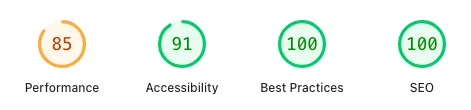
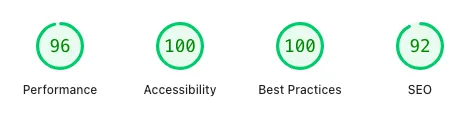
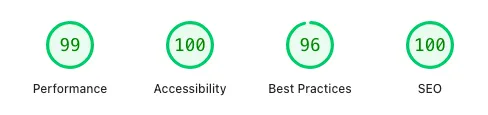
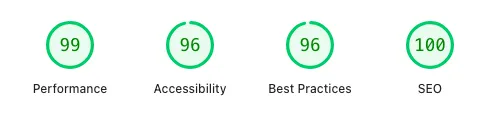
Over the years, as part of web dev. teams, Google PageSpeed Insights (free Google Speedtest for Your Website) was a common ‘click-to-audit-core-speed-performance’ for each website appearing in mobile and desktop viewports. There was a period of time when a score of 100/100 for the 4-5 grids was like a self-exhilarating moment 🚀. I guess its normal for us as Singaporeans who love and worship 100/100 marks, or used to 😂 . Although, this did not deter me from trying to understand the deeper meaning of its functionalities behind each score grid. See the range of scores I have recorded as of 17 September 2026. And no, I was never trying to hit a 💯 wonder marks because this was just the baseline (it evaluates real user experience data from Chrome users, and combines it with Lighthouse’s lab testing to deliver recommended actionable website speed optimisations) for criteria set by Google over Chrome data. Based on the SEO scores, you can really see that WordPress is the most ideal platform for SEO optimisation without paying a single cent to any third-party vendor or a so-called ‘bespoke WP Audit agency’. I run my own customised SEO widget within my LadyinTechverse site. But this does not mean that I can dust my hands off because the search landscape keeps evolving, and Google just couldn’t make up their minds when it comes to updating their features and their dev. central in order to outrank their competitors in search engines. Unfortunately, a certain percentage of users have jumped from Google Chrome to Safari, Brave, DuckDuckGo, Vivaldi, Firefox, Opera, and more. Therefore, web traffic scores on Google Consoles are about 60% baseless to make any accurate analysis or assumptions on.
The AI-Crawlability Knock-On Effect
This also has a knock-on effect worth naming for anyone building a global LLM SEO strategy around AI-crawlable content. AI crawlers and retrieval systems are sensitive to the same page-weight and script-blocking issues that hurt human visitors, so a site that benefits from core’s performance defaults is also easier for an AI system to fetch and parse quickly. As enterprise AI adoption scales the volume of automated fetching against public content, the sites with lean, fast-loading markup are the ones with the least friction between publication and citation. That same logic sits behind the access-control decisions covered in our AI crawler access control framework, where a site that loads quickly and cleanly gives a crawler less reason to abandon the fetch.
Final Thoughts: The Bottom Line
The bottom line for a self-hosted WordPress.org operator is straightforward. Before paying for a Core Web Vitals audit, run the numbers against what the current core release already delivers because a meaningful share of what agencies have historically charged for is now a default rather than a deliverable. Spend the audit budget instead on the parts core genuinely cannot reach, theme discipline, plugin hygiene, and hosting quality. That reallocation, not a rejection of technical SEO work altogether is the practitioner discipline behind this piece.
If you want a structured way to check where your own site stands against these defaults, the LITV AI SEO Agent builder story walks through how this kind of practitioner audit gets built from scratch.
Frequently Asked Questions
Does the WordPress performance team fix Core Web Vitals automatically?
WordPress’s performance team delivers core improvements, image lazy-loading defaults, script optimisation and speculative loading, that lift Core Web Vitals scores without a paid audit. Sites still need theme and plugin hygiene, but core-level gains now cover work agencies have historically billed as bespoke performance consulting.
Is a Core Web Vitals audit still worth paying for in 2026?
It depends for theme-level debt, plugin conflicts, and hosting response time, none of which core can fix by default. What has changed is the scope. An audit should now start from what core already handles rather than re-billing for it.
What is speculative loading in WordPress core?
Speculative loading prefetches or prerenders a likely next page before a visitor clicks, targeting Interaction to Next Paint directly. It shipped as a core feature rather than a paid plugin, a meaningful cost shift for any site relying on navigation-heavy content.
How often does WordPress core ship performance improvements?
Performance-focused changes now land across most major release cycles rather than as occasional special projects, reflecting the performance team’s status as an ongoing contributor group. Checking release notes each cycle is the practical habit that replaces a recurring audit retainer.
Does hosting still matter if WordPress core handles performance?
Yes. Core-level script and image optimisation cannot fix a slow server response time. Hosting quality remains a separate variable from core software performance, and a genuine audit should always test both independently.
Can AI crawlers benefit from Core Web Vitals improvements?
Faster, leaner pages are easier for AI retrieval systems to fetch and parse, which matters as enterprise AI adoption increases automated fetching against public content. Core Web Vitals gains support both human experience and AI-crawlability at once.
Internal Articles
- Three Retrieval Failure Modes Behind Wrong AI Agent Citations
- No Laptop Needed: Publishing a WordPress Blog Entirely From a Phone
- AI Crawler Access Control: The GEO Decision CMOs Must Own
- Outcome-Based Pricing for Fractional Professionals in the AI Agent Era
- Why B2B Teams are Giving AI Search Its Own Budget Line in 2026
- Agentic AI Governance: What Singapore CMOs Must Build First
- The First-Party Data Imperative: Owned Audiences in the AI Search Era
- MarTech Stack Rationalisation: What AI-Native CRMs Mean for APAC B2B
- LLM SEO Training Data vs AI Retrieval: The B2B Visibility Gap
- Machine-Readable Authority: How AI Systems Decide Who To Recommend
- Why Some MarTech Stacks Still Cannot Talk To Your AI Agents in 2026
- Ungoverned MarTech: The Hidden Compliance Risk Behind AI-Built Tools
- Why B2B Marketing Attribution is Broken in the AI Search Era
- Marketing AI Readiness: How to Prepare Your B2B Team for Agentic AI
- AI Hallucination Brand Risk in Zero-Click World: The B2B Marketer’s Verification Guide for 2026
- Why B2B Marketing Attribution is Broken in the AI Search Era
- Marketing AI Readiness: How to Prepare Your B2B Team for Agentic AI
- Generative Engine Optimisation: How to Get Cited by AI in 2026
- Answer Engine Optimisation: How B2B Brands in Singapore Get Cited in AI Search in 2026
- Synthetic Content, AI Influencers and the Fight for Authenticity in Marketing
- What is Retrieval-Augmented Generation (RAG)? A Business Guide to AI that Knows Your Data
- I Built an AI SEO Agent to Fix the Visibility Gap in AI Search
- From Server to Sanctuary: Building for Agents, Living for Real?
- Personal Brand Authority in 2026: The One Asset AI Cannot Copy
- AI Coding Tools 2026 – How to Choose the Right One for Your Workflow
- Why Internal Linking is the Most Underrated SEO Strategy You are Probably Ignoring
- Agentic AI in 2025: Ripples that Signal the 2026 Workflow Tsunami
- How can CEOs use AI and Leadership to improve Crisis Communications in 2026?
Sources Referenced
- WordPress — News and Releases, WordPress.org, 2026
- Google — Core Web Vitals Documentation, web.dev, 2026
- Search Engine Journal — Technical SEO and Core Web Vitals Coverage, Search Engine Journal, 2026
- CoreWebVitals — Core Web Vitals for WordPress: Optimization Guide (2026)
- Kinsta Google PageSpeed Insights: The Truth About Scoring 100/100
Visual Content Disclaimer: All images in this post are AI-generated.
WordPress Core Web Vitals: Why the Paid Audit is Losing its Case
#LadyinTechverse #DigitalSanctuary #DigitalTransformation #MarketingTransformation #MarTech #WordPressPerformance #CoreWebVitals #WordPressDevelopment #TechnicalSEO #SelfHostedWordPress #GEO


Leave a Reply