

Your AI Memory Can Now Travel With You Across Any Platform
There is a quiet, yet genuinely significant shift happening in the AI industry right now, and most of the coverage is either missing the real story or burying it under brand AI war headlines. The story is not really about which AI chatbot is monopolising. It is about something far more fundamental; who actually owns the personalised context you have built up with your AI assistant over months or even years of use, and what happens when you decide that you want to take it somewhere else.
On 1 March 2026, Anthropic announced that Claude users can now import their stored memories and personalisation context from other AI chatbots, including ChatGPT, Google Gemini, and Microsoft Copilot, directly into Claude. The process takes less than two minutes and requires nothing more than a copy and a paste task. That sounds super easy and very convenient, but the implications are not.
What AI Memory Portability Means for Us
If you have never thought deeply about what your AI assistant has learnt about you, this is worth pausing on. Over weeks and months of use, platforms like ChatGPT built up a detailed picture of how you work. They record your preferred response format, the tone you like, the projects you are running, your professional context, the tools and frameworks you use, and the specific instructions you have given about what to always do and what to never do. That accumulated profile is what makes a well-trained AI assistant feel very useful rather than like a generic chatbot you have to re-explain yourself or even keep repeating to it at every single chat session.
The problem exists until now, revealing that this profile was platform-specific. If you wanted to try Claude, you were starting from scratch. You would spend weeks of re-teaching a new model things your old one already knew, and that friction was enough to keep most people exactly where they were, not necessarily because the product was better and the huge pushback factor is when the switching cost was real and inconvenient.
AI memory portability changes that equation. It means the personalised context you have built does not have to live exclusively on the platform where you built it. You can with appropriate caveats that I will get to you shortly.
How the Claude Memory Import Feature Works Step by Step
The mechanics are deliberately straightforward. Anthropic has published a specific export prompt on their support page at support.claude.com. You copy that prompt and paste it into a conversation with whichever AI chatbot you are currently using. The prompt instructs that assistant to list everything it has stored or inferred about you. Your response preferences, personal and professional details you have shared, ongoing projects, tools and frameworks you use, and any instructions you have previously given about tone or format.
The assistant outputs all of that in a single structured text block. You copy that output, go into Claude’s settings under Capabilities and then Memory, and then paste it in. Claude processes the content into its own memory system and from there, your first conversation with Claude carries the context of weeks, months and years of work you did somewhere else.
What Information Gets Transferred and What Does Not

This is where honest caveats matter because the feature is genuinely useful but it is not magic. What transfers well is the structured preference data: tone instructions, formatting preferences, professional context, recurring project details, and specific behavioural rules you have set. What does not transfer cleanly is the nuanced and implicit understanding that develops through long conversation history, the kind of contextual awareness that comes from a model having processed hundreds of your actual exchanges rather than a summary of them.
It is also worth noting that different platforms store memory differently. ChatGPT’s memory feature has been noted to sometimes store inaccurate or incomplete information about users, which means you may be importing a profile that does not perfectly reflect your actual preferences. It is worth reviewing what gets imported before assuming it is accurate. Claude’s memory settings allow you to view and edit everything that has been imported, which is a practical safeguard worth using.
The Privacy Considerations You Should Know Before You Start
For readers in Singapore and across the APAC region, the data privacy dimension here deserves specific attention. Anthropic has stated that Claude memories are encrypted and are not used to train its models, and users can export their own memory data at any time. That is a meaningfully different position to some competitors, while Google’s forthcoming similar feature for Gemini has indicated that imported context would be saved to Gemini Activity and used for model training purposes.
Under Singapore’s Personal Data Protection Act and the broader GDPR frameworks relevant to those operating in UK and EU markets, you should understand what data you are moving, between which jurisdictions, and under what terms before you proceed. The import process involves pasting potentially sensitive professional context across platforms. Review what is in that export block before importing it, and redact anything you would not want a new platform to hold storage permanently.
Why AI Switching Costs have always been the Real Deal

To understand why this feature matters strategically, it helps to understand the concept of switching costs in technology markets. Switching costs are the barriers, financial, practical, or psychological, that make it inconvenient for a user to move from one platform to another. Historically, the most powerful switching costs in software have not been subscription prices. They have been data, workflow integrations, and contextual learning.
This is not a new problem. I remember it in the most physical and tangible way possible. Back in the early 2000s, when I was studying interactive media in Singapore, “transferring your work” meant carrying an Iomega Zip disk in your bag because there was no cloud, no Wi-Fi file sharing, and no USB stick in the market yet. The Zip disk held 100MB or 250MB, which felt like extraordinary capacity at the time, and the computer labs on campus had the drives built into the machines. You carried your disk the way you would carry a notebook today. It held your projects, your files, and your context. Lose the disk or the disk is spoilt, your work is done for. The physical object was the memory itself.
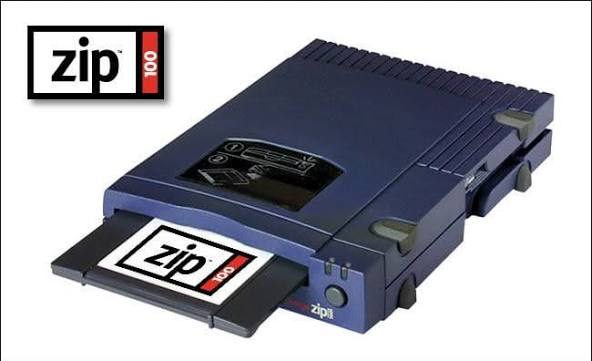
Image reference: https://www.reddit.com/r/DataHoarder/comments/ul76pw/how_to_connect_iomega_zip_drive_to_windows_10/
Then the ThumbDrive arrived, and it changed everything, particularly in Singapore because it was invented here. Trek 2000 International, a Singapore company headquartered in Loyang, was the first in the world to commercially sell a USB flash drive under the trademarked name ThumbDrive, launching it at the CeBIT technology fair in Germany in 2000 and securing a Singapore patent in April 2002. At the time, most of us studying tech and multimedia in Singapore did not fully appreciate that something invented locally was rewriting the underlying physical tech space, how the entire world would move data. What we did notice was the price. A 64 MB ThumbDrive would set you back S$50 or more, and a 128 MB version ran to S$80 and above from what I can recall as a student buying one at Sim Lim Square 😅. For a student’s budget, that was not a casual purchase. If you’d think about it during that period of time, higher capacity drives of 512 MB and above came later and costed much more. But once you had one in your hand, you would never looked back because the idea of being tied to a specific disk machine, or a specific disk format, started to feel absurd.
In the early days of the AI assistant model market, switching costs were relatively low because none of these tools knew much about you anyway. Every conversation started fresh. But as memory features developed and users invested time in training their AI assistants, a new and powerful switching cost emerged: the accumulated personalised profile. The longer you used a platform, the more it knew about you, and the more painful it became to start over somewhere else.
This is the specific dynamic that Claude’s memory import feature is designed to dismantle. As explored in this earlier piece on AI tools and the question of ethics in design, the relationship between AI tool design choices and user behaviour is rarely accidental. Reducing switching costs is one of the most aggressive competitive moves available to a challenger product, and Anthropic has executed it well. For context on the longer timeline of how we arrived here, the trajectory from the dot com bubble to the AI revolution is worth revisiting.
What This Means for Marketers, Founders and Knowledge Workers in 2026
If you work in business, tech, marketing, communications, content strategy, or any knowledge-intensive field, your AI assistant is increasingly a productivity infrastructure decision, not just a tool preference. The question of which platform you use, and whether you are locked into it, has real business implications.
For solopreneurs and independent professionals operating across multiple clients and contexts, the ability to carry a personalised AI profile across platforms means you are no longer penalised for experimenting. You can evaluate Claude’s capabilities without sacrificing the months of contextual setup you invested in another tool, and that changes the risk calculation for exploration significantly.

For marketing teams and communicators managing brand voice, content workflows, and strategic communications, the deeper implication is about AI tool strategy at the organisational level. If your team has collectively trained an AI assistant with your brand’s tone of voice, key messaging, audience context, and workflow preferences, that knowledge profile now has genuine portability value. The MarTech consolidation question explored in this earlier analysis is directly relevant here: fewer tools, used more deeply and with richer personalisation is becoming a more sustainable approach.
For founders and business leaders evaluating AI platforms for their teams, this development signals that the AI assistant market is entering into a competitive phase. When switching costs fall, platform quality has to do more of the work of retaining users. That is healthy for the market and ultimately beneficial for the people using these tools. Using AI agents effectively for business growth is a useful read if you are thinking about this at a strategic level.
What makes this moment interesting is not the feature itself. The technical mechanics are simple. What makes it interesting is what it signals about where the AI industry is heading. We are moving slowly towards a model where users have more agency over their own AI context, where personalisation data is treated as something that belongs to the person who built it rather than the platform that stored it, and where competition between AI companies has to be won on genuine quality rather than structural lock-ins.
That is a better version of this market than the one we had a year ago. Whether it holds, and whether other platforms reciprocate with serious portability rather than performative gestures, is the question worth watching.
At LadyinTechverse, this is exactly the kind of shift I track and decode, beyond the hype, beyond the brand AI wars, and straight to what it actually means for the people doing real work with these tools. If you want honest, practitioner-level analysis of AI tools, digital transformation, and what the industry is not telling you, you are in the right place.
Subscribe to the LadyinTechverse mailing list to get this kind of thinking delivered directly, or the LadyinTechverse Spotify Podcast for the longer conversations.
Frequently Asked Questions (FAQ)
Internal Articles
- Building Your Second Mini Brain in 2025: AI Tools, Digital Ethics, and What Claude 4 Taught Us About AI Boundaries
- From Dot-Com Bubble to AI Revolution
- How Brands Build Human Trust in the Age of Agentic AI, Starting in 2026
- The AI Productivity Paradox in 2025
- Digital Trust in 2025: Governance and Security Shaping the Next Economy
- Data Quality is the Power Move behind every winning AI Strategy in 2025
- Agentic AI in 2025: Ripples that Signal the 2026 Workflow Tsunami
- How can CEOs use AI and Leadership to improve Crisis Communications in 2026?
Sources Referenced
- Anthropic Support Documentation
- TechCrunch, March 2026
- Fast Company, March 2026
- 9to5Mac, March 2026
- Awesome Agents AI, March 2026
Visual Content Disclaimer: All images in this post are AI-generated.
Your AI Memory Can Now Travel With You Across Any Platform
#LadyinTechverse #DigitalSanctuary #DigitalTransformation #DigitalInnovation #AIMemory #PortableAI #Claude #ChatGPT #AnthropicClaude #AITools #RealTalkOnAI #AIMarketing #TechNews2026 #AISwitch #KnowledgeWorker #AIPersonalisation


Leave a Reply