

AI Operating System for Solopreneurs: Agency Scale Without Hiring
Halfway through 2026, the single question every solopreneur should be asking is not which AI tool to add next but whether the tools they already have are talking to each other.
An AI operating system for a one-person business is an interconnected stack of AI agents that share context, enforce brand constraints, and trigger each other in sequences without manual handoffs. Unlike individual AI tools, it functions as a complete operating system, enabling a single founder to produce, distribute, and analyse work at the consistency and volume that previously required a full team. As of mid-2026, this is not a future capability. It is a present architecture that solopreneurs globally are deploying and running in production today.
The Throughput Ceiling that Held Independent Contractors / Freelancers (Solopreneurs) Back Then
For the better part of the last decade, the growth ceiling for one-person businesses was understood almost universally as a resource constraint. You could not scale beyond what a single operator could produce, review, and distribute. The logical prescription was to hire: a content writer, a social media manager, a virtual assistant, a researcher, a video editor or a multimedia producer. But hiring introduced its own overhead, including briefing cycles, quality controls, and the particular cost of onboarding people into your company and brand platform with standards before they could produce anything you would actually publish.
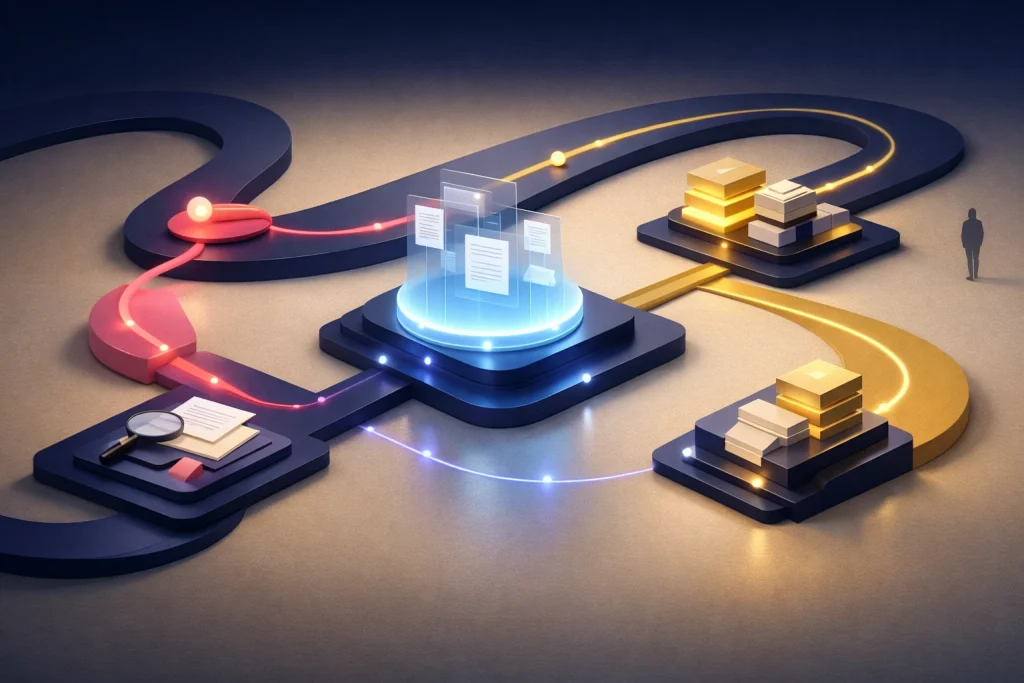
What changed in 2025 and accelerated into 2026 was not that AI tools became more capable in isolation. What changed was that AI agent orchestration and execution barriers lowered to the extent that any tom dick and harry could wire multi-step autonomous workflows in which agents hand off work to each other, share context across the chain, and apply consistent quality standards at every stage. The maturation of platforms including the Anthropic Claude Agent SDK, the OpenAI Agents SDK, and workflow engines such as Make.com and n8n crossed a meaningful threshold, whereby a non-engineer or a non-technical person could now build production-grade agentic AI infrastructure with serious governance built in. Not forgetting that any tom dick and harry could do it effectively with AI-assisted strategies, tactics and objectives.
That threshold continued to fall sharply through the first half of 2026. On 30 June 2026, Anthropic launched Claude Sonnet 5, positioned as the most agentic Sonnet model to date that is capable of planning tasks, using tools like browsers and terminals, and running autonomously at a level that just a few months earlier, required significantly larger and more expensive models. The market signal is unambiguous: agentic capability is now the baseline expectation at every price tier. The differentiator is no longer who can do agentic work but how reliably and cost-effectively it can be sustained without heavy human oversight at each step. A complete solo founder agent stack covering coding assistance, content, customer support, design, and workflow automation can run approximately between USD 150 to 600 per month in tool subscriptions. The equivalent human functions, even at junior-hire levels would cost between $30,000 and $120,000 per month once payroll, employment taxes, management time, and onboarding overhead are included. In 2026, 36.3% of new ventures are solo-founded, a figure that has been climbing steadily as AI agent reliability has improved.
The throughput ceiling did not get higher since it has already been removed.
The distinction matters because some solopreneurs still treat AI as a productivity accelerant rather than an infrastructure layer. They use AI to write faster, research faster, or respond faster, but have to repeat the context window each time and bridge the knowledge gaps manually. That is just a faster version of the same single-person bottleneck, but with a more expensive MarTech stack.
My Personal Anecdote
The above reminded me back in the days when I was freelancing wearing multiple hats: creative director/art director, digital creative, client servicing, project management, frontend tech who had to know some backend tech stuffs in case the clients asked “funny questions”, account servicing, as well as a team leader. There were no freaking ChatGPT, Claude, Gemini, Deepseek, etc., to help me. There were only Firefox search engine, Google search engine, early-age YouTube, Wikipedia, Facebook, Instagram, blog sites, and other myriad online sites that were irrelevant to me. It was just me, my *MBP aka MVP, my MS Office applications and Adobe Creative Suite. These two suite applications made up part of my bread and butter. Project management was mostly done in Excel Sheet, and I am surprised that even today, it is still being used in Excel Sheets or Google Sheets. We love tables don’t we? These days, its sometimes called Airtable – heard of it yet? Or more so an AI operating system running documents in its RAG stacks and more. It was nowhere possible where I could do all these on my own in an intensive labour hours to meet a two to four weeks timeline. So, I had to expand the team – from one person, we became a team of six to eight people like an extension of my limbs. It was because that I pitched the project as an independent contractor wearing a creative hat, the client already had the first impression and the final expectation, and I had to deliver consistent work done by me, myself and I, alongside setting up master templates so that I can delegate sub-templates to the new team members who were freelancers as well. When I had to focus on another part of the project, the client had to call me back to work on the creative finishes as they wanted me to complete it from end to end. It was unlike a chicken and egg situation. If my pitch and mockup were approved, they’d expect me to start and finish it till the end. It was too obvious if I handoff to another junior creative or even a senior creative because our working and artwork styles were different, and we did not carry the same brand of laptops nor did we share the same operating system environment as I was the only one on MacOS, and they were on Windows. Had to interview a couple of potential freelancers and couldn’t even hire a solid one until much later when we got a poly student on a school break.

While it didn’t take long enough to find talents close enough to be accountable in the quality outputs of these templates, it was the referral of some top poly students in the design and tech programme that I received a greater boost of productivity and accountability. Not to digress here, so yes there we have it. We no longer need to squeeze ourselves as much of these hassles and hustles of seeking talents for every single part of the project – the usual term is “just delegate to ChatGPT / Claude”. At its truth peak, if I had setup a creative agency following that project stint (a client offered another brief question on a larger project for a hotel – I was told that this could have been the breakthrough but I do not dwell on the past), it would be no means to an end because aside from the overhead costs, machines, servers, software applications and subscriptions, an office space, payrolls, taxes, as well as to keep clients and prospects as close as possible was inevitably futile. I thought to myself after mulling over it during that period – this was never meant to be because it would not have lasted a decade in such a super saturated industry. True enough, some former business owners I know shared their stories and encounters with me. While some business owners are still running like a sweatshop, they are accounted for high turnovers. And those who have survived with a more lean team, deep down they really know what they are dealing with.
*MBP aka MVP : Macbook Pro as the Most Valuable Player
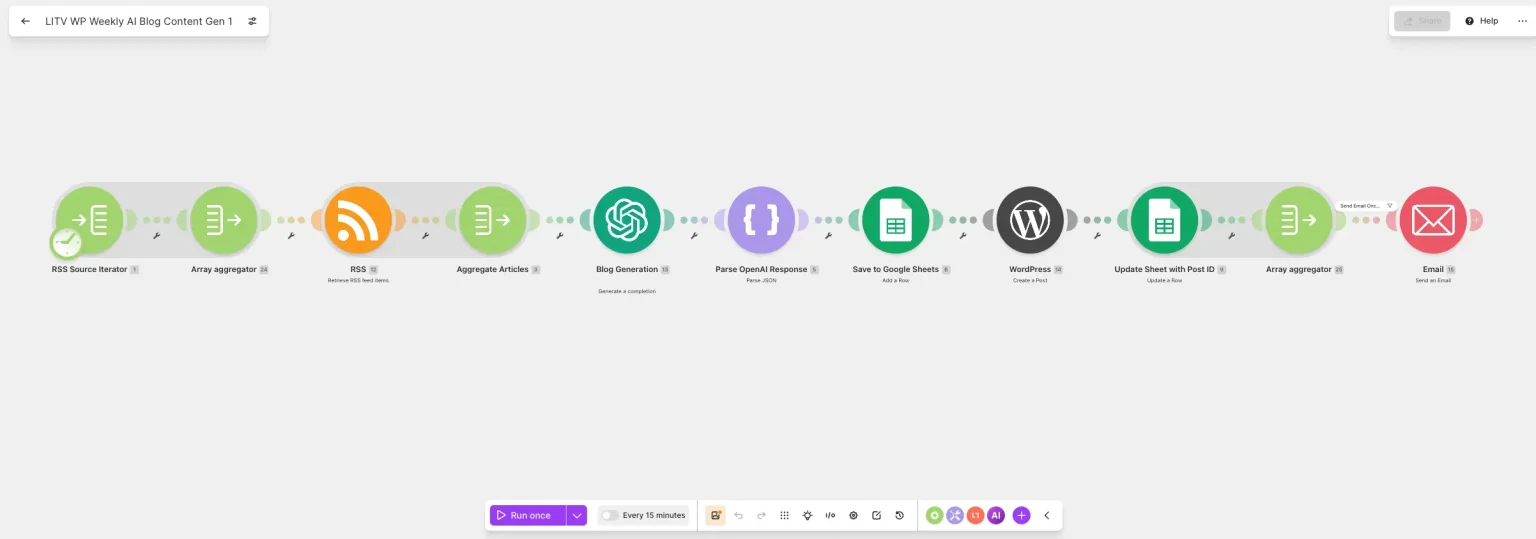
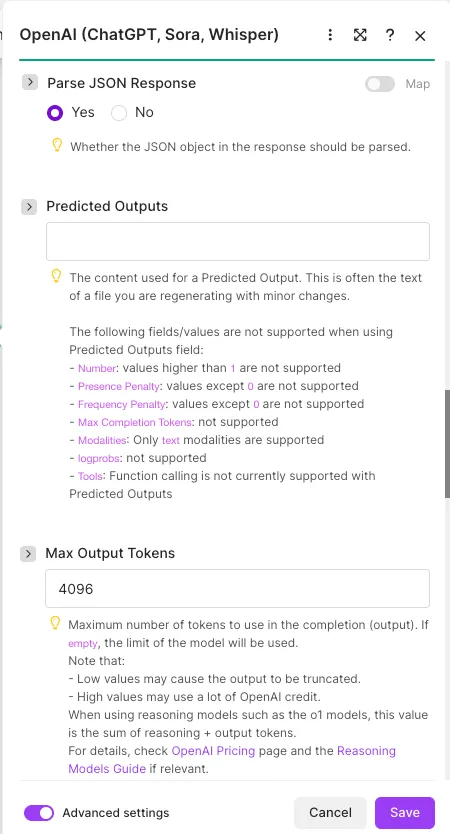
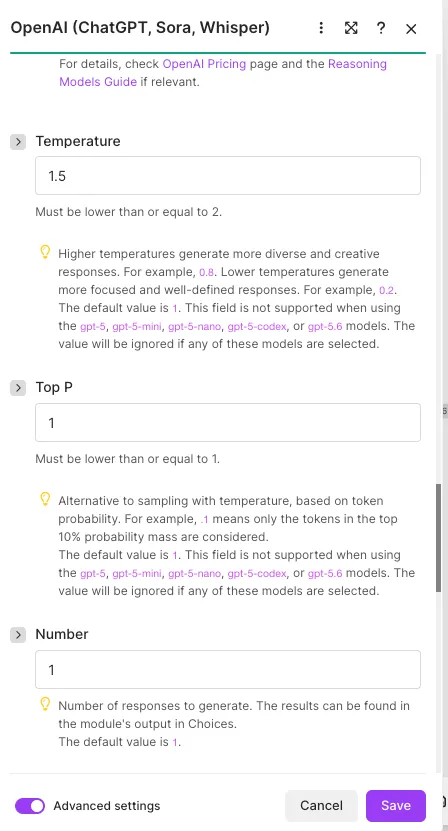
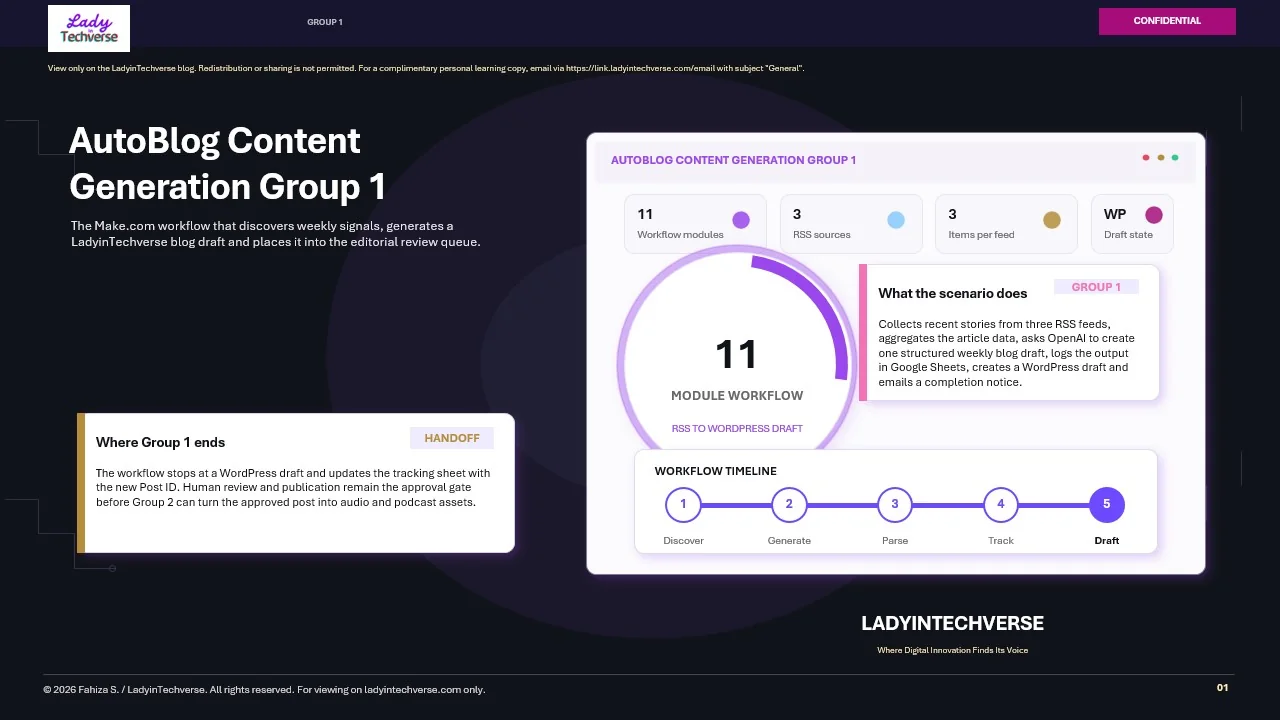
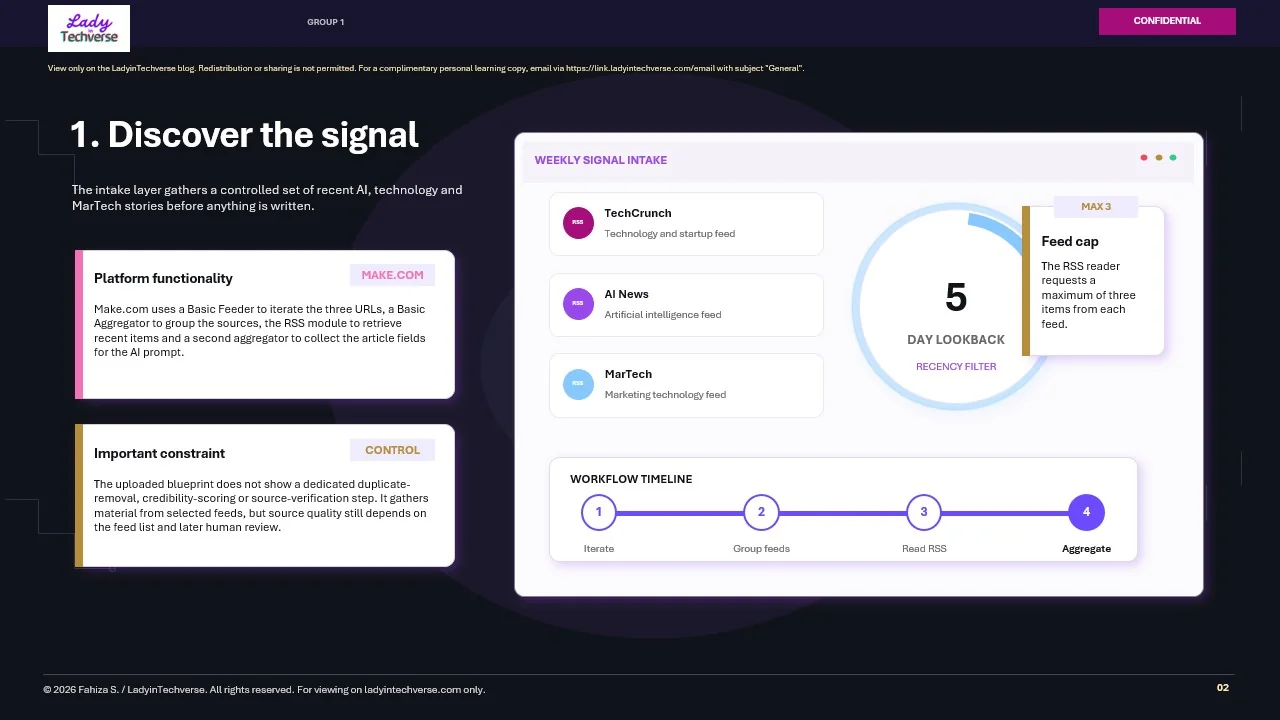
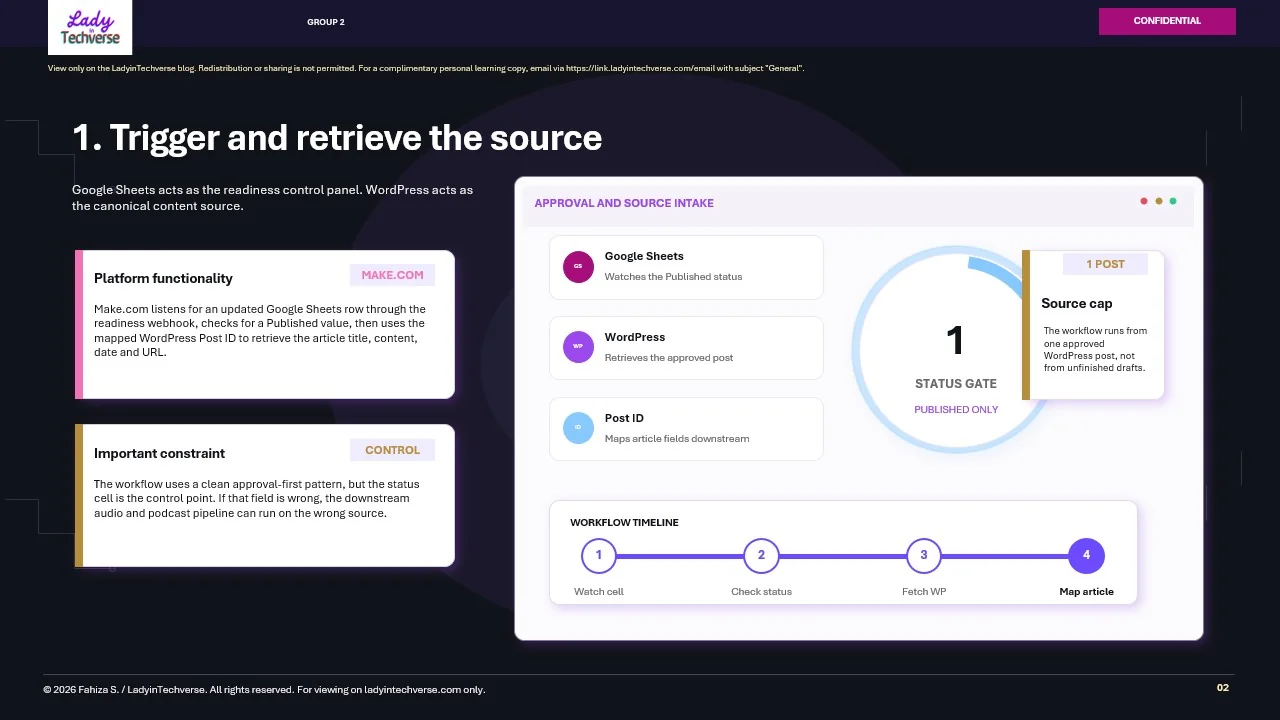
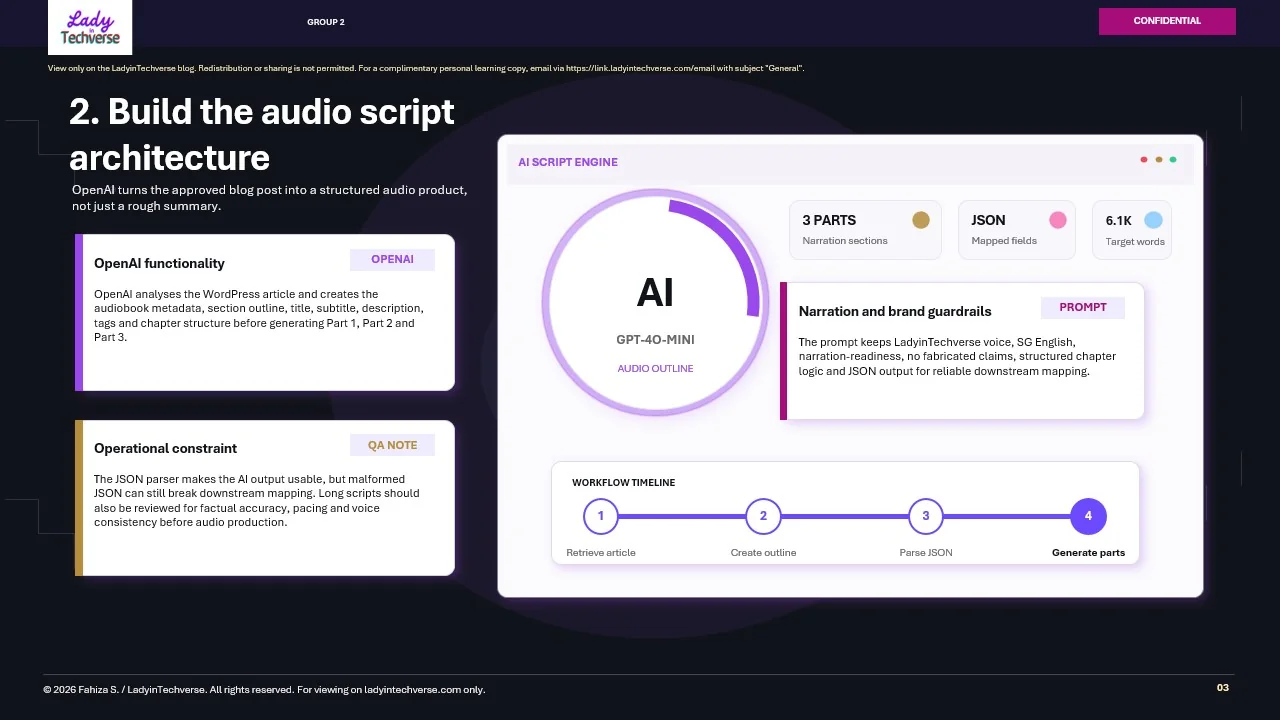
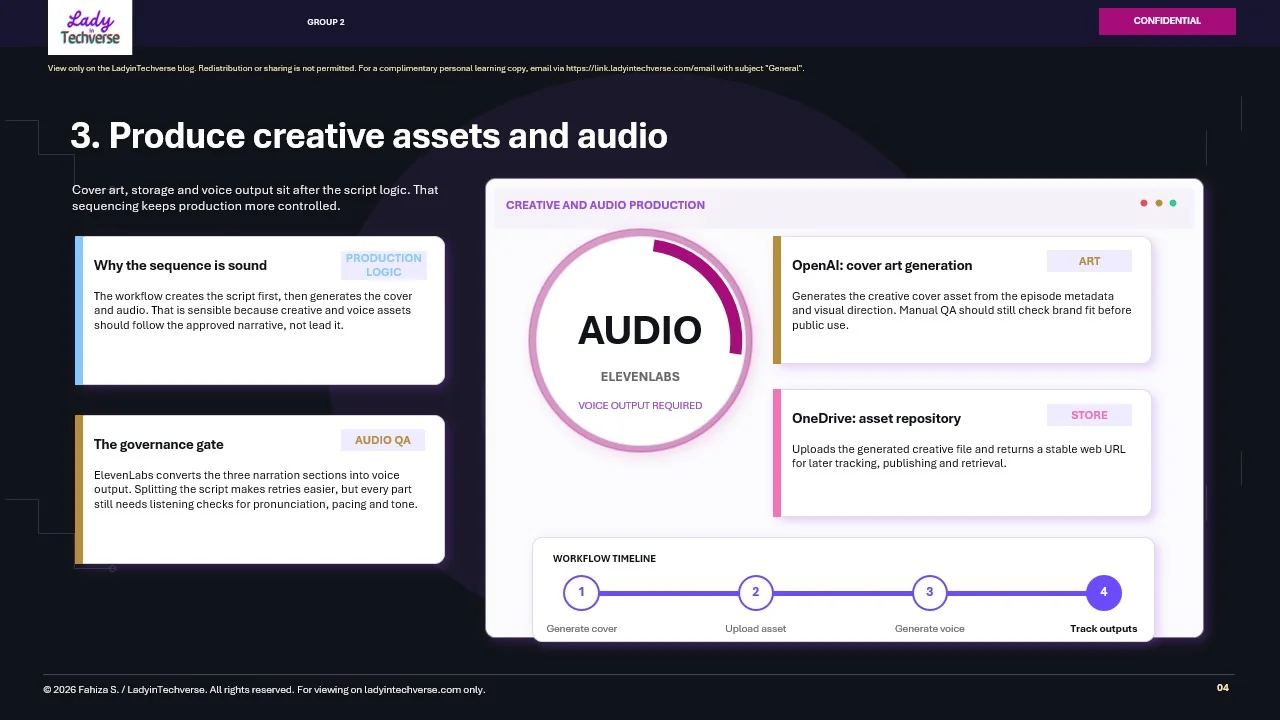
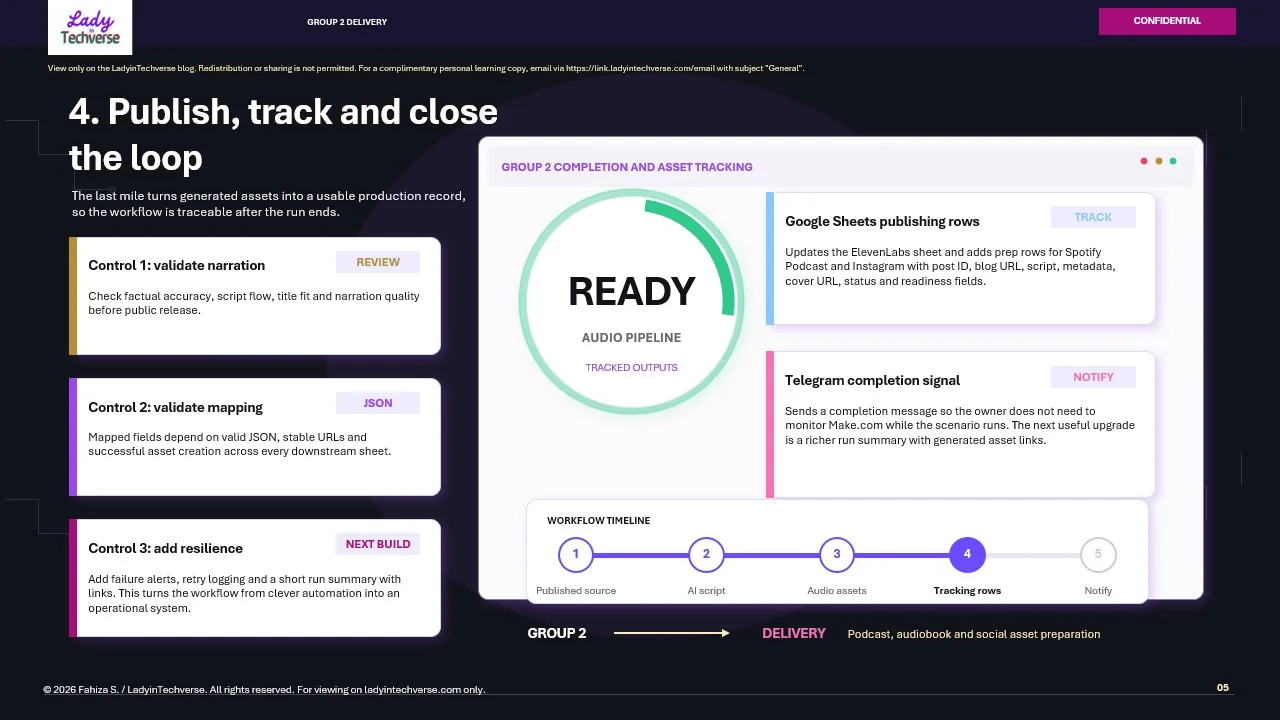
Below is a short snippet of how my previous Make.com workflow where (I sped up the video duration) used to run in the background from reading my blog article content, updating in new cells and rows (lol!), to synthesising my blog content and generating it through ChatGPT, and then to ElevenLabs to generate my podcast and audiobook in a gist, and lastly updating me through Telegram that it has completed. This was one of the simplest methods I have used to run the flow through this platform. Unfortunately, I did not continue with Make.com as soon as OpenAI Agent SDK and Claude Agent SDK risen to compel us.
AutoBlog Content Generation Group 1 Workflow
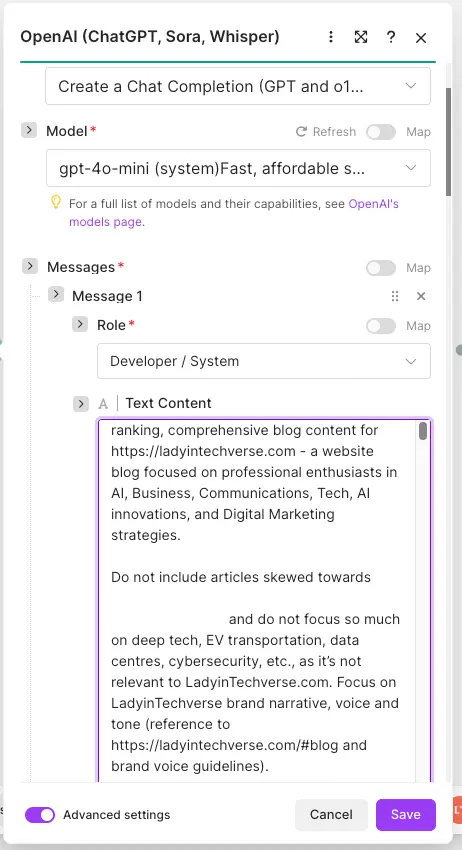
OpenAI Metadata System and User Prompt Injection
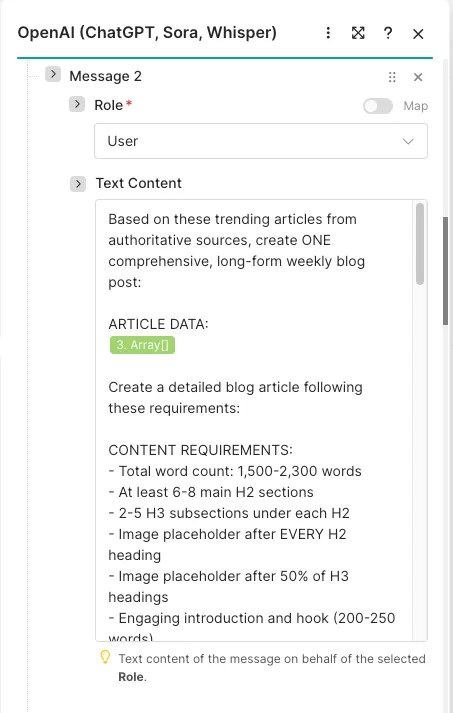
AutoBlog Content Generation Group 2 Workflow
The full workflow process can be viewed here.
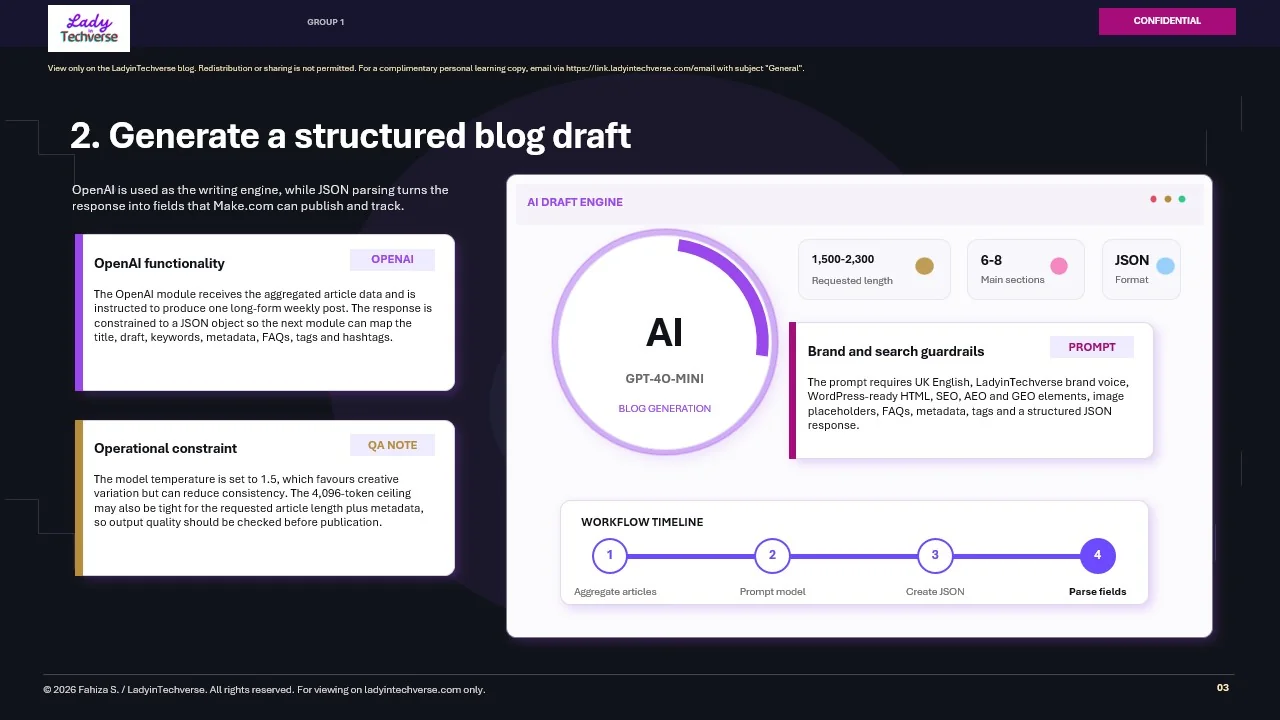
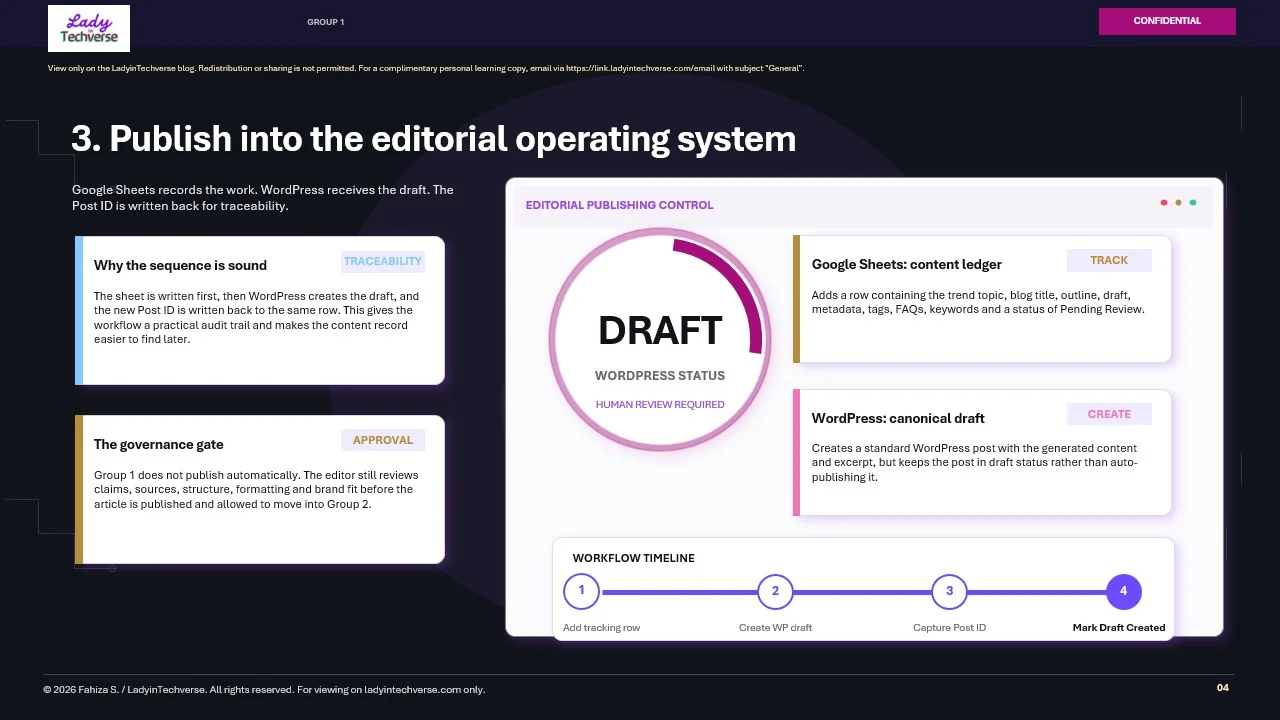
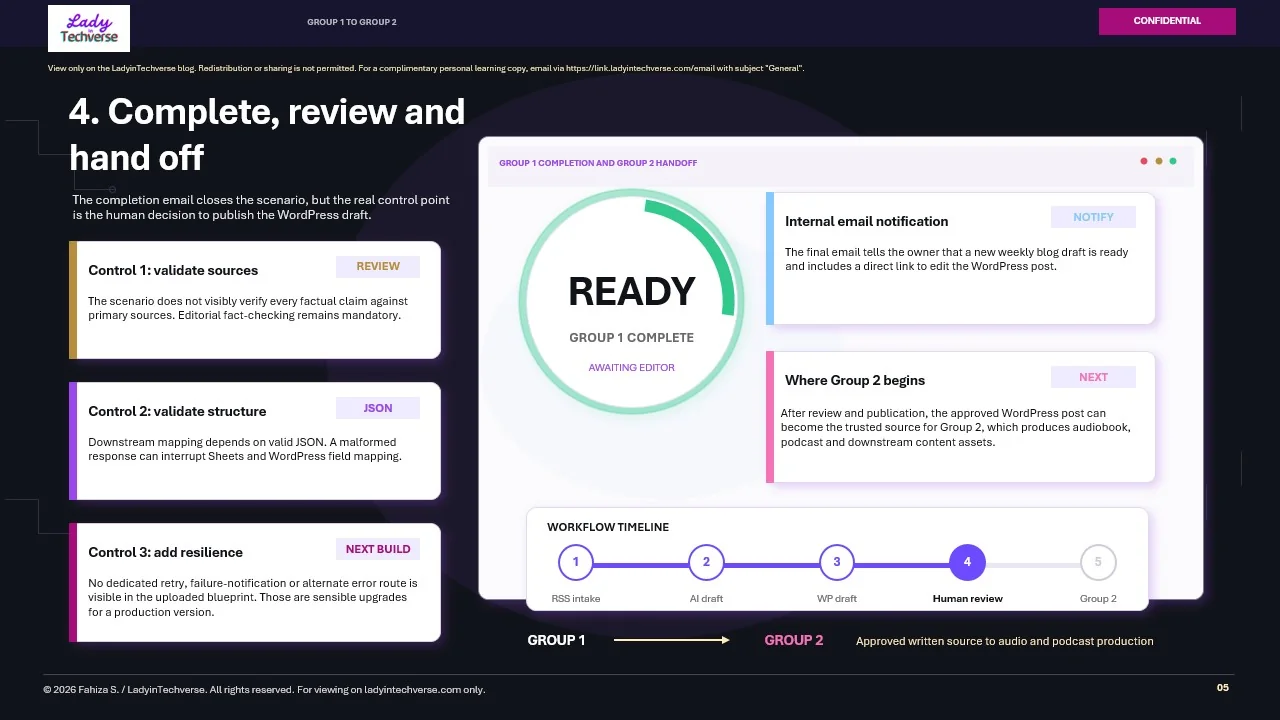
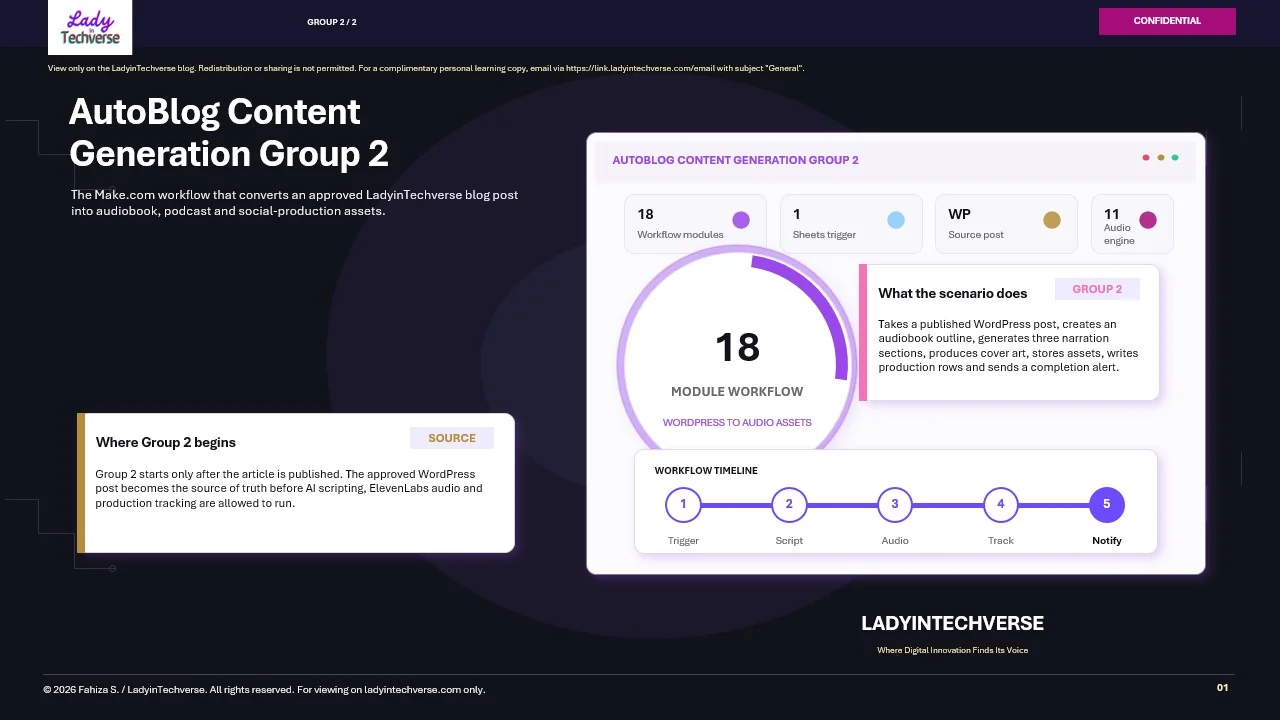
OVERVIEW
Group 1: RSS to WordPress Draft
11 workflow modules collect three RSS feeds, generate a structured blog draft with OpenAI, and log the result as a WordPress draft awaiting human review.
What Separates an AI Operating System From an AI Toolset
The difference between an AI toolset and an AI operating system is whether the agents share context and enforce constraints automatically, or whether you are the context bridge between every step.
In a toolset model, a founder uses one AI to research, a second to write, a third to design, and a fourth to schedule and so forth. Each tool operates in isolation. Research output is copied manually into a writing prompt. The draft is reviewed and pasted into a design brief. Scheduling instructions are added by hand. Every handoff passes through the operator. The throughput ceiling follows them into every tool they pick up.
In an operating system model, a research agent reads a verified topic brief and passes structured intelligence directly to a writing agent. The writing agent applies brand voice rules, word count constraints, and SEO requirements without being reinstructed at each run. When the draft is complete, a quality gate validates it against codified brand standards. If it passes, a distribution agent stages it for the publishing queue. If it fails, the system logs the failure, flags it for human review, and waits. None of those handoffs pass through the founder’s attention.
What makes this an operating system rather than a pipeline is context persistence: each agent in the chain knows what the others have produced, can reference shared rules and previously generated assets, and operates within a governance layer applied uniformly. The governance layer is the component that most solopreneur AI stacks are still missing. Running AI agents independently without connecting them through a shared intelligence and constraint layer is the equivalent of installing software on a computer with no operating system. Each application works in isolation. Nothing talks to anything else.
The Four Layers of a Solopreneur AI Operating System

Building an AI operating system for a one-person business is not a matter of selecting the right combination of tools. It requires a deliberate architecture across four layers, each of which feeds the next.
Layer 1: Intelligence
The intelligence layer is where signal enters the system. An intelligence agent monitors sources relevant to your domain, validates their recency and credibility against defined standards, and produces structured topic briefs that meet editorial criteria before any content production begins. This layer prevents the most common failure mode of AI content at scale: generating output based on outdated, unverified, or low-authority information. For a solopreneur operating in a specialised field, the intelligence layer defines the editorial standard that all downstream production must meet. Without it, you are scaling noise faster than you were producing it manually.
Layer 2: Production
The production layer converts verified intelligence into finished assets: blog posts, social captions, email sequences, image generation briefs, or audio scripts. The critical design requirement here is that production agents must receive brand constraints at runtime, not through prompt engineering that lives only in the operator’s memory. Brand voice rules, tone requirements, format specifications, word count constraints, and platform-specific character limits must be codified and enforced automatically. When a production agent generates content that violates brand rules, the governance layer catches it before it reaches the operator, not after. This reverses the usual quality control workflow: instead of reviewing everything and catching errors post-production, errors are caught before delivery. Your time is reserved for approval, not correction.
Layer 3: Distribution
The distribution layer stages and schedules finished assets across channels without requiring the operator to manually post, reformat, or re-caption for each platform. In a functional operating system, the production layer outputs assets that the distribution layer can consume directly, with the correct dimensions, captions, hashtags, and metadata pre-populated per platform specification. The distribution layer does not make editorial decisions. It prepares assets and queues them for a final human review and approval gate before anything goes live. This preserves editorial control without recreating the manual bottleneck at the distribution stage.
Layer 4: Governance
The governance layer is the operating system’s enforcement mechanism, and it is where most solopreneur AI stacks break down. Governance means that every agent in the system applies a consistent set of rules without requiring the operator to restate them in each prompt. Brand voice scoring, source verification, format compliance, and status tracking are enforced by the system, not by memory. Governance also means that every run produces an audit log: what was produced, what passed quality assurance, what was flagged for review, and what was skipped and why. Without a governance layer, an AI operating system degrades quickly. Agents drift, quality inconsistencies accumulate, and the operator ends up with an expensive collection of tools producing work they do not fully trust.
How to Wire the Governance Layer
The governance layer is not a tool you install. It is a design decision you make before you build, and the starting point is a set of explicit, machine-readable constraints: rules that can be evaluated programmatically rather than remembered contextually.
For a content operation, this begins with a brand voice definition that names specific anti-patterns in plain language. Rather than “sound professional,” the document specifies: no em dashes, no bullet-point prose, no generic buzzwords substituted for mechanism, UK English throughout. It then adds a source credibility standard defining minimum authority tier and maximum source age, a format compliance checklist covering word count range, heading hierarchy, internal link minimum, and call-to-action requirement per content type, and a status workflow that governs exactly what happens when an asset fails any quality audit.
Once these constraints are codified, you connect them to an orchestration layer, whether that is a framework such as the Claude Agent SDK, an automation platform such as Make.com, or a combination of both. The orchestration layer routes output from one agent to the next and applies governance rules at each handoff. Running a proper AI readiness assessment before you build helps identify which of your existing processes are already rule-executable and which genuinely require human judgement at each stage. That distinction is the architectural map for deciding what to automate and what to gate.

The governance layer also defines escalation paths. When an agent produces output that fails quality assurance after two iterations, the system should not simply discard the content. It should log the failure, flag the specific issue, save the draft with a QA-failed status, and notify the operator. Every failure is information. A governance layer that silently discards failed output is worse than no governance at all, because it creates invisible gaps in your pipeline without surfacing the reason.
One practical note for solopreneurs building on the Claude Agent SDK as of July 2026: Anthropic pulled back a planned billing change for the SDK on 15 June 2026, the same day it was due to take effect. Pricing remains unchanged for now, though Anthropic has confirmed a revised structure is in development. If your governance layer depends on Agent SDK economics at current subscription rates, treat this as an active variable to monitor. The commercial tension that prompted the original announcement has not been resolved; it has only been deferred.
What This Looks Like in Practice
The LITV AI SEO Agent, live at seoagent.ladyintechverse.com, is built on exactly this kind of architecture. Beneath the dashboard that audits your Technical SEO, SXO, GEO, and AEO frameworks in a single run, an agentic infrastructure layer keeps the system operational without the founder’s physical presence. Security monitoring runs daily. Automated system checks run at set hourly intervals. Every agent in the system applies the same governance rules on each cycle, logs its status, and escalates failures through a defined path rather than discarding them silently.
This is what a production-grade solopreneur operating system looks like from the outside: it keeps functioning precisely when the operator is not watching. The constraint is no longer uptime or throughput capacity. The constraint is editorial judgement and strategic direction, which are precisely the things no automation layer can replicate or replace.
For solopreneurs considering this model, personal brand authority becomes the critical differentiator as production scales. Automated systems can match your output volume. They cannot replicate your editorial positions, your verifiable lived experience, or your consistency of perspective across years of published work. That is the asset that remains genuinely yours as the operating system takes over the production throughput.
The architecture also benefits solopreneurs working within Singapore’s B2B ecosystem specifically. The IMDA AI Verify framework provides governance guidance applicable to any AI-augmented business operating in the region, and the senior marketing strategy model increasingly favoured by Singapore SMEs aligns naturally with the fractional-operator-plus-AI-infrastructure approach.
Final Thoughts: The Bottom Line
The solopreneurs operating at agency scale in the second half of 2026 are not the ones using the most AI tools. They are the ones who designed the best operating systems: systems in which agents share context, governance is enforced structurally, and human attention is reserved for the decisions that require actual judgement.
The architecture is buildable. The platforms exist. The cost case, once theoretical, now sits at approximately $300 to $500 per month for a complete agent stack, a fraction of what equivalent human functions would cost. The constraint is no longer access to the technology but willingness to think in systems rather than tasks. Most solopreneurs optimise for the next tool that will make them faster. The ones scaling past the throughput ceiling are designing the layer that connects all the tools, enforces quality without constant supervision, and produces at volume without scaling the founder’s cognitive load alongside it.
The LITV AI SEO Agent is a live example of what an AI operating system delivers in practice: a single-run audit of your Technical SEO, SXO, GEO, and AEO frameworks that surfaces your AI Visibility Index and Citation Probability Score, telling you precisely how visible you are across ChatGPT, Perplexity, Google AI Overviews, Claude, Gemini, and Bing Copilot. If you are at the stage of auditing your content infrastructure and want to understand where your current approach is leaving AI visibility performance on the table, run a diagnostic at seoagent.ladyintechverse.com.
Frequently Asked Questions (FAQs)
Internal Articles
- Why B2B Marketing Attribution is Broken in the AI Search Era
- Marketing AI Readiness: How to Prepare Your B2B Team for Agentic AI
- Generative Engine Optimisation: How to Get Cited by AI in 2026
- Answer Engine Optimisation: How B2B Brands in Singapore Get Cited in AI Search in 2026
- Synthetic Content, AI Influencers and the Fight for Authenticity in Marketing
- What is Retrieval-Augmented Generation (RAG)? A Business Guide to AI that Knows Your Data
- I Built an AI SEO Agent to Fix the Visibility Gap in AI Search
- From Server to Sanctuary: Building for Agents, Living for Real?
- Personal Brand Authority in 2026: The One Asset AI Cannot Copy
- Vibe Coding is Rewriting Digital Services: What Agencies, SaaS, and Marketers Must Do Next
- AI Coding Tools 2026 – How to Choose the Right One for Your Workflow
- Why Internal Linking is the Most Underrated SEO Strategy You are Probably Ignoring
- The AI Productivity Paradox in 2025
- Agentic AI in 2025: Ripples that Signal the 2026 Workflow Tsunami
- How can CEOs use AI and Leadership to improve Crisis Communications in 2026?
- How Brands Build Human Trust in the Age of Agentic AI, Starting in 2026
- Digital Trust in 2025: Governance and Security Shaping the Next Economy
- Data Quality is the Power Move behind every winning AI Strategy in 2025
- Why more than 90% of AI Pilots Fail and How Hyper-Personalisation Wins
Sources Referenced
- Anthropic — Claude Agent SDK and Agentic Tools Documentation — 2025–2026
- Fortune — Solo Founders Are Using AI to Do the Work of Entire Teams, But Going It Alone Has Limits — Fortune Media — May 2026
- McKinsey Global Institute — The State of AI: How Organisations Are Rewiring to Capture Value — McKinsey and Company — 2025
- n8n — Workflow Automation Documentation — n8n GmbH — 2026
- Make.com — Enterprise Automation Platform Overview — Celonis — 2026
Visual Content Disclaimer: All images in this post are AI-generated.
AI Operating System for Solopreneurs: Agency Scale Without Hiring
#LadyinTechverse #DigitalSanctuary #DigitalTransformation #MarketingTransformation #MarTech #AIOperatingSystem #SolopreneurAI #AgenticAI #AIAgents #MarTech #AIVisibility #LadyinTechverse #AIStrategy #MarketingTransformation #SolopreneurLife #AgencyScale #AIAutomation #FractionalCMO #AIInfrastructure2026 #ClaudeAgentSDK


Leave a Reply