AI Agent Identity and Liability in the Future of Software
ladyintechverse
When an IT team issues a CMO’s AI agent a scoped API key to work inside their CRM, or a looping Marketing system, that agent becomes more than a productivity tool. It is a credential actor inside the team’s systems.
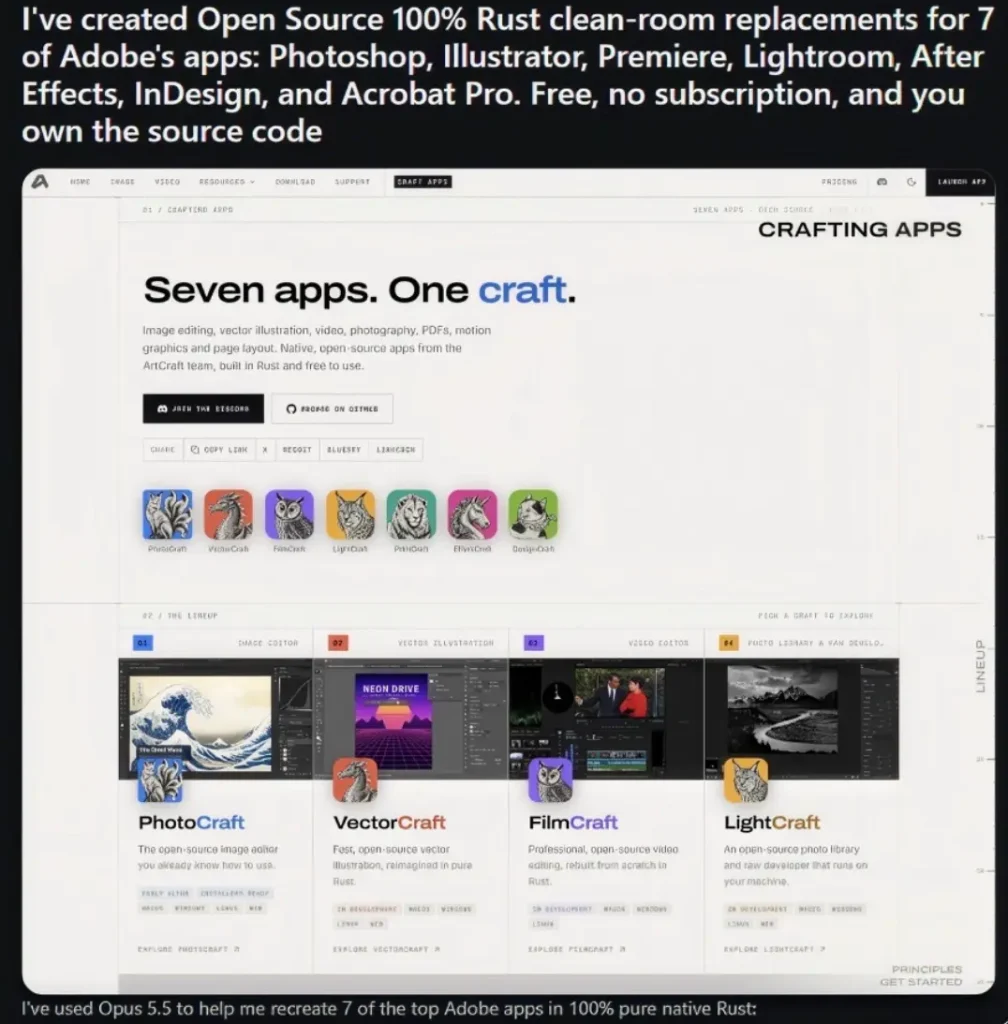
At the same time, AI is lowering the barrier to building software itself. The emerging ArtCraft project is a vivid example. Software engineer, Brandon Thomas says he used AI-assisted development with Anthropic’s Claude Opus 5.5 to create a free, open-source suite of applications intended to replicate workflows found in seven Adobe products (Adobe Creative Cloud).
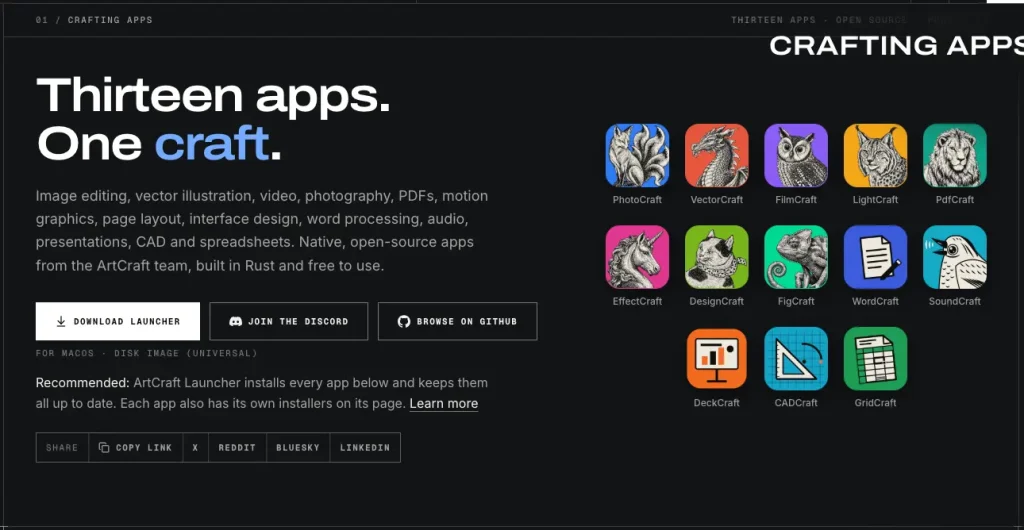
The last time I looked at the ArtCraft page, it read “Seven apps. One craft.”. As of 19 October 2026, it reads “Thirteen apps. One craft.” The pace alone is mind-blowing. The size additions cover interface design, word processing, audio, presentations, CAD, and spreadsheets, including early stage equivalents of Word, Excel, and PowerPoint. This article stays with the seven Adobe equivalents because they are what the first reports covered.
These two stories are uncannily connected. As software becomes easier to reproduce, the tools people use may change faster. But when an AI agent acts inside those tools, responsibility does not become any clearer. The engagement contract, insurance policy and liability clause may still be written around a human doing the work.
It seemed like Brandon has fully open sourced MS Office. The last time I saw his page, it wrote “Seven Apps. One Craft”. Its now showing “Thirteen Apps. One Craft”. mind-blowing epic software reverse engineering
The Application Layer is Starting to Flatten
For a long time, building a serious creative application required substantial engineering time, expertise and resources. That made established software suites difficult to challenge — not only because they were familiar, but because reproducing their capabilities was expensive and slow.
ArtCraft points toward a different possibility. In early October coverage, TechSpot and PetaPixel reported that Thomas used AI tools to help build open-source alternatives to seven Adobe applications, including tools for photo editing, vector graphics, video, page layout, and PDFs. The project includes PhotoCraft, VectorCraft, FilmCraft, and LightCraft. It is built in Rust, and is intended to run on macOS, Windows and Linux.
That is not the same as proving Adobe has been replaced. ArtCraft is an early stage application. PetaPixel reports that Thomas describes the suite as alpha, and Techspot reports that commenters have encountered problems with basic functionality. Thomas’ stated ambition to reach feature parity is a target, not evidence that the applications already match Adobe for reliability, performance, or professional use. TechSpot also reports that Thomas first promised 100 percent parity within a month, then said on Hacker News that reaching 99 percent would take months rather than years. But the signal is significant: the work of creating an application may be getting less exclusive.
If AI-assisted development makes it easier to reproduce familiar workflows, more developers may be able to build alternatives to established products. The near-future software market could become flatter: more tools, more competition, and fewer applications that are difficult to challenge simply because building a competing product once required a large team, and a long timeline.
When the Tools Multiply, So Do the Access Questions
That shift matters to any professionals using AI tools. A CMO may work across client-owned CRMs, ad platforms, analytics tools and automation systems. Those applications may increasingly include AI features, third-party integrations, and purpose-built alternatives. The stack can change quickly, while the permissions and accountability arrangements around it remain harder to update.
A client’s security team may not view an agent as simply “the CMO working faster”. If the agent has a scoped API key or service account, it may be managed as a separate non-human identity, with its own permissions and activity logs.
The practitioner relationship remains human, but the access pattern does not.
That distinction becomes more important as AI agents take on work across a growing number of applications. A client may approve the human engagement, grant the agent access and permit specific actions — yet the contract may never name the agent, or explain how responsibility applies when work is performed through it.
Why The Paperwork Can Fall Behind
Software products can evolve quickly. An agent can be connected to a CRM, an ad platform or a newly adopted application without the engagement agreement being revisited. The technology changes; the written assumptions may not.
Many service agreements are framed around a named professional delivering work personally, or through staff under their supervision. Their confidentiality, liability and performance terms may not clearly address an AI agent holding its own credential, and taking actions inside client infrastructure.
This is not only a question of which application the agent uses. It is also a question of what the agent can do, which identity it uses, who approved that access, and how its actions are attributed.
A governance framework may explain who approves an agent’s actions. The contract still needs to make clear how agent-mediated work fits within the engagement, and what happens when an agent acts within the permissions it was given but produces an unexpected result.
The Insurance Question is Still Open
Professional indemnity policies, and client contracts may not expressly address every AI agent scenario. Coverage depends on the wording of the specific policy, the work performed, and the circumstances of a claim. It should not be assumed that a policy automatically covers, or automatically excludes an agent’s actions simply because the professional approved its use.
The practical issue is disclosure and clarity. If an agent will access client systems, the professional should understand whether the client and insurer know about that access, how it is controlled and how responsibility is treated in the relevant documents.
That question becomes more pressing as software alternatives multiply. If teams can adopt new applications, or connect agents to new tools more easily, each change may introduce a new access path. A tool being cheap, or free doesn’t decide who’s responsible for what its AI agent does.
What Fractional Professionals Should Do Before The Next Engagement
Three steps can help make the arrangement clearer:
Ask how the client classifies, and manages the agent’s access. Find out whether it will use a dedicated service account, API key, or other credential, what permissions it will receive, and whether its activity will be logged separately from your own.
Check the agreement against the actual workflow. If an agent will perform work in your own or a client’s systems, make sure the contract addresses agent-mediated work and clarifies how that work is attributed to the signing professional. Do not assume a clause written for human performance automatically answers every question.
Ask the insurer directly in writing. Describe the agent, the systems it will access, and the tasks it will perform. Ask how the policy applies to that arrangement before renewal, or before the work begins. As applications become easier to build and replace, the number of tools in a professional’s stack may grow. The accountability arrangements should not be left behind.
My Personal Anecdote: When the System is Your Own, the Questions Do Not Go Away
Few CMOs give an agent a scoped API key for their own company’s CRM, ad accounts, or automation platform, where no client or engagement contract is involved. That can feel like internal housekeeping, yet nothing about the risk changes. A credential exists, it carries permissions, and a named person is accountable for what the agent does with it. It is also where sandboxes live, thrive and fail at the same time.
With no client to ask the awkward questions, the company has to ask them of itself. Which identity does the agent use, who approved its access, and who is the named human accountable for it? What does it log, and when did anyone last review it? If software keeps getting cheaper to build, these questions become more urgent, not less. A team that can build or adopt an internal tool quickly may connect an agent to it just as quickly, and every connection is a new access path that nobody scheduled time to review.
I put the same questions to myself. For my own platform, there is no client and no procurement team to set the rules, so I set them. When I work with Claude and ChatGPT, I ask for judgement calls to be put in front of me as options before anything is executed, and I ask for proposed changes as a list I can review, approve, or reject. I also have an AI agent acting as my QA and QC gatekeeper. It checks the quality before anything reaches my review, and if I do not have the time to review the document, it sends me a reminder before the deadline. Those habits are small, but a security team would recognise them: a defined role, a named human who is accountable, and a record of what was proposed. IYKYK, right — the agent acting as my QA and QC gatekeeper can once-in-a-blue-moon sleep on its job, breaks off from the workflow due to insufficient tokens, missed a few audited lines, and did not check on the latest scopes. That’s where I have to come back to my computer to fine tune the entire process, after each model or patch updates. I have to be very restrictive for certain type of workflows. Therefore, the agent may have decided to bail on me without any conscience, when I told the agent that it is having a ‘dementia’ moment. 😅
Final Thoughts: The Bottom Line
The application may be easier to replace, however, accountability isn’t. ArtCraft is too early to prove that established creative software is about to disappear. It does offer a timely illustration of how AI-assisted development may lower the barrier to creating competing applications.
That could make software more abundant, and the application layer flatter, but it does not flatten responsibility. When an AI agent uses a scoped identity inside a client’s systems, the human engagement, access permissions, and insurance terms still need to line up.
The risk is not simply that an agent makes a mistake. It is that the systems allowed the agent to act, the contract never clearly described that arrangement, and everyone assumed someone else had resolved the gap.
Frequently Asked Questions (FAQs)
What does it mean for the software application market to become “flatter”?
It means the barriers to building competing applications may fall, making it possible for more developers to attempt products that reproduce familiar workflows. It does not mean every new application will match established products in quality, reliability, or support.
Does ArtCraft already replace Adobe Creative Cloud?
No. PetaPixel describes the suite as alpha, and TechSpot reports commenters encountering problems with basic functionality. Its stated feature parity goals should be treated as ambitions, not as proof that it is already a professional substitute.
What is an AI Agent’s machine identity?
It is a non-human credential, such as a service account, or an API key, that lets an agent access systems without using a person’s login. The credential can have its own permissions, and activity records.
Who is liable if a CMO’s AI agent makes a mistake?
That depends on the contract, the facts, the permissions granted, and the applicable insurance policy. The important practical step is to make agent-mediated work explicit in the engagement, and confirm the insurance position directly with the insurer.
What should I clarify before letting an agent use a client’s systems?
Clarify the identity, and permissions it will use, how its actions will be logged, what is is authorised to do, how agent-mediated work is treated in the contract, and whether the insurer has been informed.
Do the same rules apply when an agent works inside my own company’s systems?
Yes. With no client, nobody outside the company asks the questions, so the company has to ask them itself: which identity the agent uses, who approved its access, what is logged, and who reviews it.
Is agentic AI governance the same as contractual accountability?
No. Governance can define who approves, and monitors an agent’s actions. Contractual and insurance terms address how responsibility is allocated if those actions cause harm, or produce an unexpected outcome.
Fahiza is a digital strategist and marketing leader with more than 18 years of experience across MNCs, regulated industries, and startups.
She founded a Singapore-based thought leadership platform at the intersection of AI strategy, marketing transformation, and digital innovation, building it from the ground up into a multi-format content and product ecosystem. As a Fractional CMO, she partners with founders, marketers, business owners, and tech leaders to build distribution that compounds. She helps brands grow visibility, earn trust, and translate complex AI-era strategy into commercially decisive action. Her expertise centres on AI-first search, smarter marketing systems, and the kind of operational clarity that turns fragmented Marketing operations into measurable growth engines. She brings to every engagement the rare combination of boardroom credibility, hands-on execution, and a practitioner’s instinct for what actually works.







Leave a Reply